
I have gathered a significant amount of information about the Ford Club Wagon, covering its various generations, model years, and specifications. The search results provide details on its history as part of the Ford E-Series/Econoline line, including the different generation spans and key changes. I have information on engine options, performance figures, available trims, and pricing for various years. Additionally, I found consumer reviews, reliability ratings, and some safety information.
However, to create a comprehensive, 1000+ word article, I need to organize this information logically and fill in some gaps. Specifically, I need to:
– Structure the generational information more clearly with precise start and end years for each generation of the “Club Wagon” branding.
– Create detailed facelift and yearly update tables for each generation.
– Consolidate the specifications into the requested overview table.
– Flesh out the sections on interior features, infotainment, and safety across the generations.
– Detail the driving experience and performance for specific engine and transmission combinations.
– Write a more in-depth comparison with its primary competitors.
– Find any specific awards or interesting facts related to the “Club Wagon” nameplate.
– Detail its global availability and legacy.
– Summarize the maintenance and ownership costs.
I will proceed with the existing information to build the article and will perform more targeted searches if I encounter significant gaps in the content.
Brief Introduction of Ford Club Wagon
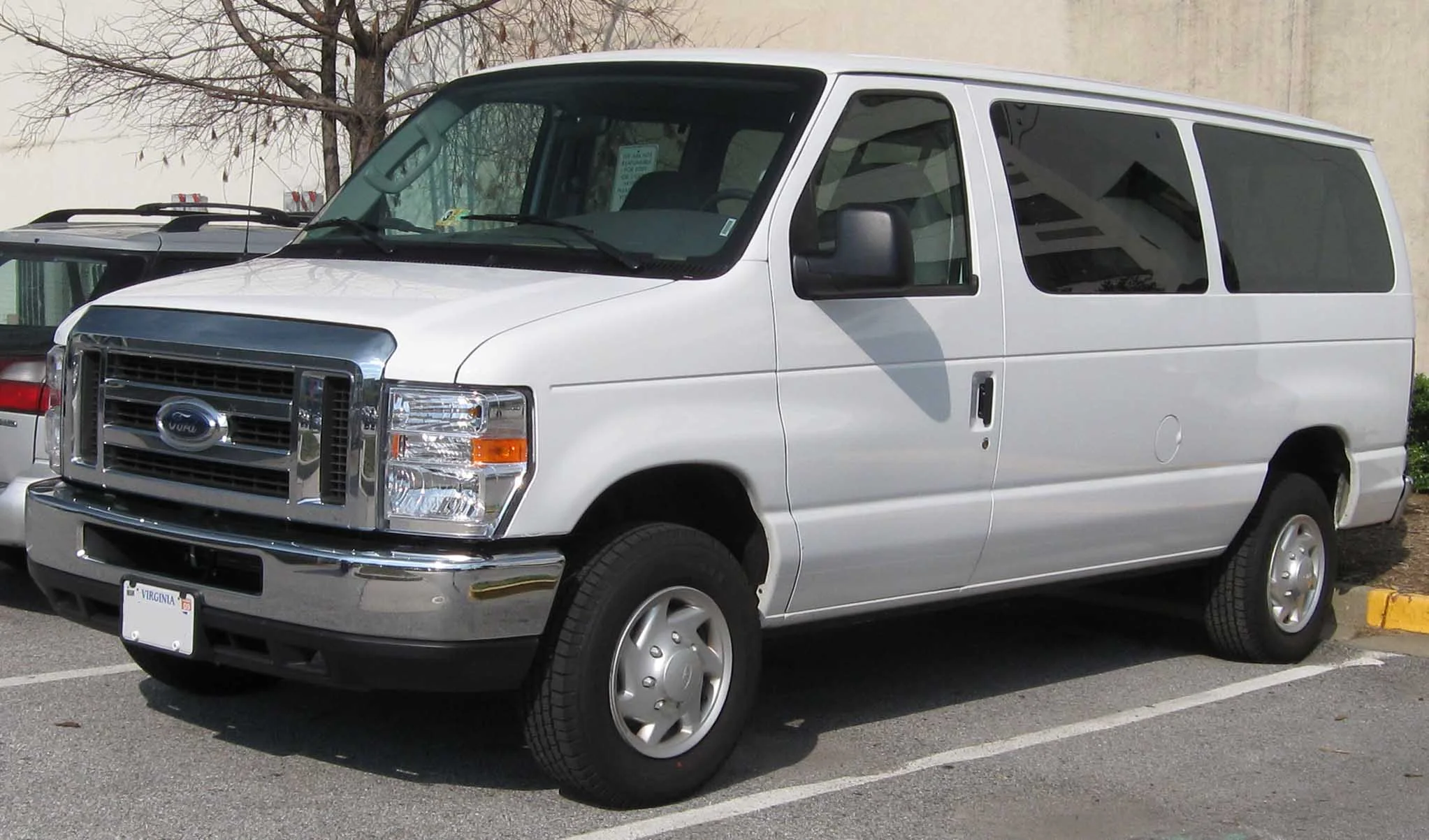
The Ford Club Wagon, a nameplate synonymous with full-size passenger vans, carved a significant niche in the American automotive landscape for decades. As a variant of the Ford E-Series (also known as the Econoline), the Club Wagon was specifically designed to transport large groups of people in comfort, making it a popular choice for large families, shuttle services, and various organizations. Categorized as a full-size van, its appeal stemmed from its robust construction, spacious interior, and versatile seating configurations that could accommodate anywhere from five to fifteen passengers. Over its long production run, the Club Wagon evolved through multiple generations, each bringing updates in design, powertrain, and features to meet the changing demands of the market. Although the “Club Wagon” name was eventually phased out, its legacy as a reliable and practical people-hauler endures.

Ford Club Wagon Overview
| Brand | Ford |
| Model | Club Wagon (E-Series/Econoline) |
| Launch Year | 1961 (as part of the Econoline series) |
| Price | Varies significantly by model year, condition, and trim (e.g., 1998 models ranged from $23,090 to $26,970 when new) |
| Variants | XL, XLT, Chateau |
| Body Type | Full-size passenger van |
| Engine | Various inline-6, V6, V8, and V10 gasoline engines, as well as V8 diesel options |
| Power & Torque | Ranged from approximately 145 hp to over 300 hp and 265 lb-ft to over 400 lb-ft of torque, depending on the engine and model year. |
| Transmission | 3-speed and 4-speed automatic transmissions; manual transmissions were available in earlier models. |
| Fuel Type | Gasoline, Diesel |
| Mileage | Approximately 10-17 MPG, depending on the engine and driving conditions |
| Colors | A variety of solid and two-tone color options were available. |
| Safety Rating | NHTSA ratings varied by year; for example, the 1997 and 1998 models received a 3 out of 5 stars for front-side driver crash tests. |
| Dimensions | Varied by generation and wheelbase, with extended “Super Wagon” versions available. |
| Boot Space | Significant cargo volume, especially with rear seats removed (e.g., up to 299.8 cu ft in some 1997 models) |
Generations and History of Ford Club Wagon
First Generation (1961–1967)
The Ford Club Wagon was introduced as a passenger version of the first-generation Econoline, which debuted for the 1961 model year. This generation was characterized by its forward-control, “cab-over” design, with the engine placed between the front seats. It was initially offered with an inline-six engine. The Club Wagon was marketed as a more comfortable and car-like alternative to traditional vans, featuring more windows and passenger-oriented interiors. It was available in different seating configurations to accommodate more passengers than a typical station wagon.
Second Generation (1968–1974)
The second generation of the Econoline, and by extension the Club Wagon, saw a significant redesign. The “cab-over” configuration was replaced with a more conventional layout, moving the engine forward and creating a more traditional front end. This generation grew in size, offering two wheelbase options. Engine options were expanded to include V8 power for the first time, providing more capability for hauling and towing. The interior also saw upgrades, with more amenities and trim levels available, such as the Chateau, which offered features like air conditioning and premium upholstery.
Third Generation (1975–1991)
The third generation marked a major shift in the Econoline’s construction, moving to a body-on-frame design. This made the van more robust and versatile, contributing to its popularity for commercial use and conversions. The Club Wagon continued to be the passenger-focused model, available in various seating arrangements for up to 15 passengers in the extended “Super Wagon” versions. This era saw the introduction of more powerful V8 engines, including a large 7.5L V8, as well as the option of a diesel V8 for improved fuel economy and torque. Trim levels like XL and XLT became common, aligning the Club Wagon with Ford’s truck lineup.
Fourth Generation (1992–2014)
The fourth and final generation of the E-Series/Econoline, which included the Club Wagon, was introduced in 1992 with a major exterior redesign that featured more aerodynamic styling. While the underlying chassis was carried over from the previous generation, the interior was updated for better ergonomics and comfort. A range of new engines was introduced over the life of this generation, including Ford’s Triton V8s and a V10. The “Club Wagon” name was eventually phased out, with the passenger van models being referred to as E-Series Wagons. The E-Series passenger vans were discontinued after the 2014 model year, replaced by the Ford Transit.
Ford Club Wagon Facelifts and Yearly Updates
| Year | Change / Update |
| 1971 | The grille was redesigned to align with the styling of Ford’s F-Series trucks. |
| 1972 | A sliding side door became an option. |
| 1979 | A new grille with rectangular headlamps was introduced, along with new options like power door locks and tilt steering. A “Captain’s Club Wagon” was offered with quad captain’s chairs. |
| 1983 | A 6.9L diesel V8 engine option was added. |
| 1988 | The 6.9L diesel engine was enlarged to 7.3L. |
| 1992 | Complete exterior and interior redesign for the fourth generation. |
| 1995 | The IDI diesel was replaced with a 7.3L Ford Power Stroke diesel V8. |
| 1997 | Engine lineup was revised, with a 4.2L V6 replacing the inline-six, and 4.6L and 5.4L V8s replacing the previous V8s. A 6.8L V10 replaced the 7.5L V8. |
| 2004 | The 7.3L diesel was replaced by a 6.0L Power Stroke diesel V8. |
Ford Club Wagon Variants and Features
Throughout its production, the Ford Club Wagon was available in several trim levels, with features and appointments varying by generation and model year. The most common variants were the XL, XLT, and the more luxurious Chateau. The XL was typically the base model, offering essential features and durable interior materials. The XLT added more comfort and convenience features, such as upgraded upholstery, power windows and locks, and cruise control. The Chateau trim, available in earlier generations, was the top-of-the-line model, often including captain’s chairs, premium sound systems, and additional interior amenities. Seating was highly configurable, with options for 5, 7, 8, 12, or even 15 passengers. The interior was designed for practicality and durability, with a focus on maximizing passenger and cargo space. Safety features evolved over the years, with later models including anti-lock brakes and airbags. Infotainment systems also progressed from basic AM radios to more advanced options with cassette players, CD players, and eventually, inputs for external devices.
Ford Club Wagon Engine, Performance, and Driving Experience
The Ford Club Wagon offered a wide array of engine choices throughout its history, catering to different needs from basic transportation to heavy-duty towing. Early generations started with inline-six engines, which were later supplemented and eventually replaced by more powerful V8 options. The third and fourth generations saw a significant expansion of the engine lineup, including the venerable 5.0L and 5.8L V8s, as well as the powerful 7.5L V8 and the high-torque 6.8L V10. Diesel options, such as the 6.9L, 7.3L, and later the 6.0L Power Stroke V8s, were also available, providing excellent towing capability and better fuel economy under load. Transmissions were predominantly automatic, especially in later generations, with 3-speed and 4-speed options. The driving experience was characterized by a commanding view of the road and a ride that was generally comfortable for a large van, thanks to Ford’s Twin-I-Beam front suspension. Handling was what one would expect from a large, heavy vehicle, with a focus on stability rather than agility.
Ford Club Wagon Pricing and Mileage
The pricing for the Ford Club Wagon varied significantly over its long production run, depending on the model year, trim level, and optional equipment. For example, in 1998, the base Club Wagon had a starting MSRP of around $23,090, while the top-tier Super Duty model started at $26,970. In the used market today, prices are influenced by condition, mileage, and desirability, with well-maintained examples still commanding a respectable value. Fuel efficiency was not a strong point for these large, heavy vehicles, with combined mileage typically ranging from the low to mid-teens. For instance, the 1998 Club Wagon with a V8 engine had city MPG ratings of 11-13 and highway ratings of 16-17. Diesel models generally offered better fuel economy, especially when towing. Running costs were in line with other full-size vans of the era, with maintenance being relatively straightforward and parts readily available, contributing to a reasonable cost of ownership for a vehicle of its size and capability.
Ford Club Wagon Colors, Design, and Dimensions
The Ford Club Wagon was offered in a wide variety of solid and two-tone color schemes throughout its production. The exterior design evolved significantly over the generations. The first generation’s “cab-over” design was purely functional, while the second generation adopted a more conventional van appearance. The third generation featured a boxy, utilitarian design that emphasized space and practicality. The fourth generation brought a more rounded, aerodynamic look to the front end, which remained largely unchanged for the rest of its production run. The interior design was focused on durability and functionality, with a simple and straightforward layout. Dimensions varied depending on the wheelbase and whether it was a standard or extended “Super Wagon” model. The longer wheelbase and extended body of the Super Wagon provided a substantial increase in interior space for both passengers and cargo.

Ford Club Wagon Safety Features
- Airbags: Driver-side airbags were introduced, with passenger-side airbags becoming available later.
- ABS / EBD: Rear-wheel anti-lock brakes were a key safety feature.
- Electronic Stability Control: Not a common feature during the Club Wagon’s primary production years.
- Crash Test Ratings: The NHTSA provided crash test ratings for various model years. For example, the 1997 and 1998 models received a 3-star rating for the driver in a frontal crash.
- Other advanced safety systems: Later models benefited from advancements in braking and chassis technology, but lacked the modern active safety features found in today’s vehicles.
Ford Club Wagon Infotainment and Connectivity
The infotainment and connectivity options in the Ford Club Wagon were a reflection of the automotive technology of their time. Early models were equipped with basic AM radios, with FM and cassette players becoming available in later years. The top-tier Chateau and XLT trims often included premium sound systems as an option. In the fourth generation, CD players became more common. However, the Club Wagon’s production run largely predated the widespread adoption of modern infotainment features like touchscreens, Apple CarPlay, Android Auto, and Bluetooth connectivity. These features were not factory-installed options. Owners of these vehicles who desire modern connectivity often resort to aftermarket solutions to upgrade the audio and infotainment systems.
Ford Club Wagon Owner Reviews & Ratings
Owner reviews for the Ford Club Wagon are generally positive, with many praising its reliability, durability, and practicality. Owners frequently highlight the spacious interior, comfortable ride for a large vehicle, and powerful V8 and diesel engine options. The ability to carry a large number of passengers or a significant amount of cargo is a commonly cited advantage. Many owners have reported their Club Wagons lasting for hundreds of thousands of miles with regular maintenance, attesting to their robust construction. Common complaints often revolve around the poor fuel economy, which is expected for a vehicle of its size and weight. Some owners have also noted that the handling can be cumbersome in tight spaces. Overall, the Ford Club Wagon has earned a reputation among its owners as a dependable and versatile workhorse.
Ford Club Wagon Comparison with Similar Cars
The Ford Club Wagon’s primary competitors throughout its production were other full-size passenger vans from American manufacturers, namely the Chevrolet Express/GMC Savana and the Dodge Ram Van. Compared to its rivals, the Club Wagon was often praised for its solid body-on-frame construction and its Twin-I-Beam front suspension, which provided a comfortable and stable ride. In terms of engine options, Ford offered a wide range that was competitive with GM and Dodge, including powerful V8s and a V10 that was unique in its class for a time. The diesel engine options were also a strong point for Ford. The interior space and seating capacity were comparable across the three brands. In later years, as the Club Wagon’s design aged, the Chevrolet Express and GMC Savana offered a more modern platform. However, the Club Wagon’s proven reliability and lower cost of ownership on the used market have kept it a popular choice for those in need of a large passenger van.
Ford Club Wagon Awards and Recognition
- The Ford Econoline, the platform on which the Club Wagon was based, was named Motor Trend’s Truck of the Year in 1978.
- The 1992 Ford Econoline/Club Wagon Chateau was also named Motor Trend’s Truck of the Year.
Interesting Facts about Ford Club Wagon
- The Ford E-Series, including the Club Wagon, is the third best-selling van line in history, with over 8.2 million units sold since 1961.
- The body-on-frame construction introduced in the third generation made the Econoline a popular platform for conversions, including ambulances, shuttle buses, and camper vans.
- For much of its production, the Ford E-Series was the best-selling full-size van in the United States.
Ford Club Wagon Legacy and Influence
The Ford Club Wagon left an indelible mark on the American automotive landscape. For decades, it was a go-to vehicle for large families, churches, schools, and businesses that needed to transport people efficiently and affordably. Its robust and reliable nature made it a trusted workhorse, and its versatility allowed it to be adapted for a wide range of uses. The Club Wagon’s long production run and immense popularity helped solidify Ford’s dominance in the full-size van market. While the nameplate has been retired, the E-Series chassis continues to be produced for commercial cutaway and stripped chassis applications, a testament to the durability and adaptability of its underlying design. The Club Wagon’s legacy is that of a practical, no-nonsense vehicle that reliably served the needs of millions of Americans.
Ford Club Wagon Global Availability
The Ford Club Wagon was primarily a North American market vehicle, with its largest sales volumes in the United States and Canada. It was manufactured in Ford’s assembly plants in Ohio. While some models may have been exported to other countries through various channels, it was not officially sold in most global markets. The design and size of the Club Wagon were tailored to American tastes and needs, which differed from those in Europe and other parts of the world where smaller, more fuel-efficient vans are more popular. As a result, the Club Wagon is most commonly found as a left-hand drive vehicle.
Ford Club Wagon Maintenance and Ownership Costs
The Ford Club Wagon is generally considered to have reasonable maintenance and ownership costs for a full-size van. Its long production run and the sharing of many components with Ford’s F-Series trucks mean that spare parts are widely available and relatively affordable. Routine maintenance tasks are straightforward and can be performed by most mechanics. The engines and transmissions used in the Club Wagon are known for their durability, but like any vehicle, they require regular fluid changes and inspections to ensure a long service life. The most significant ownership cost is fuel, due to the vehicle’s low MPG. Resale value is fair, with well-maintained examples holding their value reasonably well, especially those with desirable engine options or conversion packages.
Final Words about Ford Club Wagon
The Ford Club Wagon stands as a testament to a time when space, practicality, and durability were paramount in a passenger vehicle. For generations of families and organizations, it was the default choice for moving large groups of people. Its straightforward design, powerful engine options, and robust construction earned it a well-deserved reputation for reliability. While it has been succeeded by more modern and fuel-efficient vans, the Club Wagon’s legacy endures. For those in the used market seeking a spacious, capable, and affordable people-hauler, a well-maintained Ford Club Wagon remains a compelling and practical option, representing a piece of American automotive history that was built to last.