
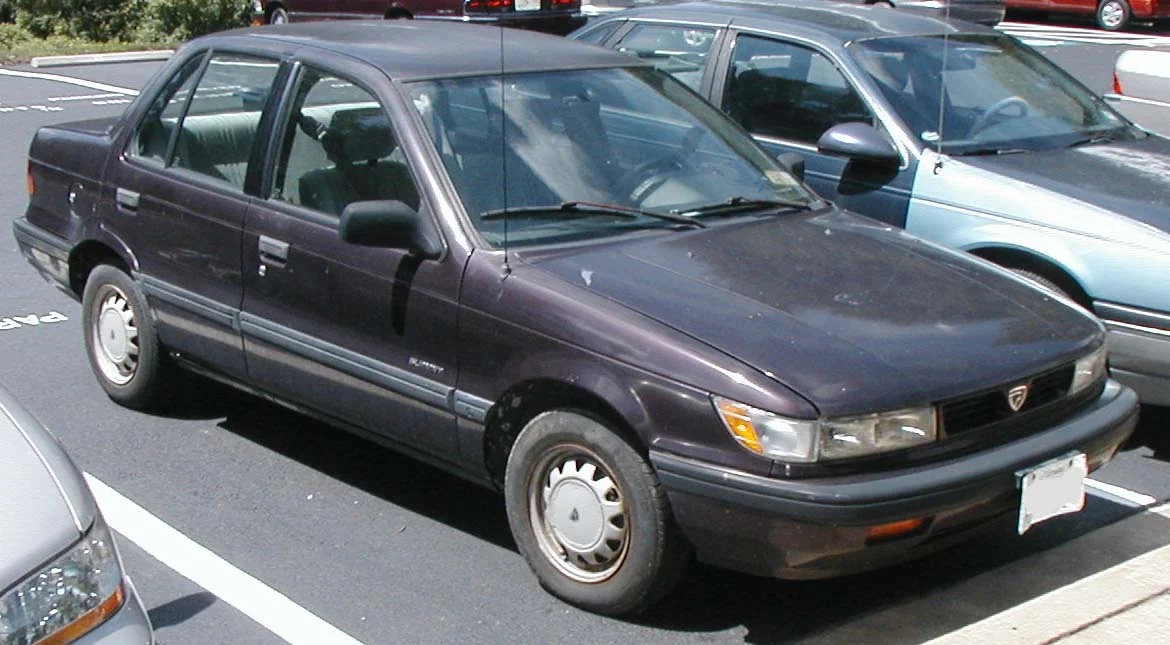
Brief Introduction of Eagle Summit
The Eagle Summit was a line of subcompact cars sold by the Eagle division of Chrysler Corporation from 1989 to 1996. Essentially a captive import, the Summit was a rebadged version of the Mitsubishi Mirage, a result of the Diamond-Star Motors joint venture between Chrysler and Mitsubishi Motors. The Summit was marketed as a competitor to popular imported cars and was available in several body styles throughout its two generations, including a four-door sedan, a two-door coupe, a three-door hatchback, and a unique five-door wagon. It was noteworthy for offering a surprising amount of interior space for its class, particularly rear legroom, and a range of fuel-efficient engines. The Eagle Summit is a clear example of badge engineering from the late 1980s and 1990s and represents a significant part of the Eagle brand’s history before it was discontinued.

Eagle Summit Overview
| Brand | Eagle (Chrysler) |
| Model | Summit |
| Launch Year | 1989 |
| Price | Original MSRP ranged from approximately $8,640 to $19,009 depending on year and trim. |
| Variants | DL, LX, ES, ESi, Base |
| Body Type | Sedan, Coupe, Hatchback, Wagon (MPV) |
| Engine | 1.5L I4, 1.6L I4, 1.8L I4, 2.4L I4 |
| Power & Torque | 81 hp – 136 hp; 91 lb-ft – 145 lb-ft |
| Transmission | 4-speed manual, 5-speed manual, 3-speed automatic, 4-speed automatic |
| Fuel Type | Gasoline |
| Mileage | Combined MPG ranged from approximately 20 to 31 MPG depending on engine and body style. |
| Colors | Included various shades of White, Black, Red, Blue, Silver, Green, and Gray. |
| Safety Rating | Information not publicly available. Early models had motorized seatbelts, later models had dual airbags. |
| Dimensions | Varied by body style. Sedans were around 170.1-171.1 inches in length. Wagons were around 168.5 inches long. |
| Boot Space | Approximately 10.3 to 11.5 cubic feet for sedans and hatchbacks; up to 79 cubic feet in wagons with seats down. |
Generations and History of Eagle Summit
First Generation (1989–1992)
The first-generation Eagle Summit was introduced in 1989 as a four-door sedan, a rebadged version of the third-generation Mitsubishi Mirage. It was initially offered in DL and LX trims. The standard engine was a 1.5-liter four-cylinder producing 81 horsepower. An optional 1.6-liter DOHC 16-valve four-cylinder engine with 113 horsepower was available for the LX trim, offering a significant performance boost. The Summit was noted for its spacious interior for a subcompact car. Initially built in Japan, production for some models moved to the Diamond-Star Motors (DSM) plant in Normal, Illinois, starting with the 1991 model year. A 3-door hatchback was added to the lineup for the 1991 model year. In 1992, the Summit Wagon was introduced, which was a rebadged Mitsubishi RVR and was a completely different vehicle from the sedan and hatchback, featuring a taller body and a sliding rear passenger door.
Second Generation (1993–1996)
The second-generation Summit debuted for the 1993 model year, based on the fourth-generation Mitsubishi Mirage. The styling was updated with a more rounded and modern look. The hatchback was replaced by a two-door coupe, and the four-door sedan continued. The Summit Wagon, still based on the Mitsubishi RVR, also continued to be offered. The base engine was an updated 1.5-liter four-cylinder that now produced 92 horsepower. A new optional engine was a 1.8-liter SOHC four-cylinder making 113 horsepower. The Summit Wagon also offered a larger 2.4-liter engine producing 136 horsepower and was available with all-wheel drive. This generation saw the addition of more safety features, with a driver’s side airbag becoming standard in 1994 and a passenger-side airbag added in 1995. The Eagle Summit was discontinued after the 1996 model year as Chrysler shifted its focus to the new Plymouth Neon.
Eagle Summit Facelifts and Yearly Updates
| Year | Change / Update |
| 1991 | A 3-door hatchback model was introduced. Some production moved to the Diamond-Star Motors plant in Illinois. |
| 1992 | The Summit Wagon, a rebadged Mitsubishi RVR, was added to the lineup, available with optional all-wheel drive. |
| 1993 | Complete redesign for the second generation with new coupe and sedan body styles. New optional 1.8L engine. |
| 1994 | A driver’s side airbag became standard. The DL sedan was renamed LX and received the 1.8L engine. |
| 1995 | A passenger-side airbag was added, making dual airbags standard. ES trims were renamed ESi. |
| 1996 | Final model year with minor changes including new paint colors and interior fabrics. |
Eagle Summit Variants and Features
Throughout its production, the Eagle Summit was available in a variety of trim levels. The first generation offered DL and LX trims for the sedan, with the LX offering more features and the optional, more powerful 1.6L engine. The hatchback, introduced later, came in base and ES trims. The second generation featured DL and ES (later ESi) trims for both the coupe and sedan. The Summit Wagon was available in DL and LX trims, as well as an all-wheel-drive version. Interior features were typical for an economy car of the era, with cloth seats and basic amenities. Higher trim levels offered features like power windows and locks, a tilt steering wheel, and air conditioning. The infotainment systems were basic, typically consisting of an AM/FM radio and cassette player. Advanced safety features were limited in early models, with motorized front seatbelts being a notable feature of the time. Later models saw the crucial addition of dual airbags.
Eagle Summit Engine, Performance, and Driving Experience
The Eagle Summit offered a range of four-cylinder engines. The first generation started with an 81-horsepower 1.5L engine, with a more spirited 113-horsepower 1.6L DOHC engine available. The second generation’s base engine was a 92-horsepower 1.5L, and the optional engine was a 113-horsepower 1.8L. The Summit Wagon had the most powerful engine option, a 136-horsepower 2.4L. Transmission choices included a 4-speed or 5-speed manual, and a 3-speed or 4-speed automatic. The driving experience was generally considered pleasant for a subcompact car. The suspension provided a comfortable ride, and the handling was predictable. The models with the more powerful engines offered decent acceleration for their class. The Summit Wagon, with its available all-wheel drive, provided enhanced traction and stability in various weather conditions.
Eagle Summit Pricing and Mileage
The Eagle Summit was positioned as an affordable vehicle. Original Manufacturer’s Suggested Retail Prices (MSRP) varied by year and trim level, with early models starting around $8,640 and later, higher-trim models reaching up to $19,009. Fuel efficiency was a strong point for the Summit. Combined mileage for the sedans and coupes typically ranged from the high 20s to low 30s in miles per gallon. For example, the 1994 coupe with a 1.5L engine and manual transmission could achieve around 28 MPG in the city and 35 MPG on the highway. The larger and heavier Summit Wagon had lower mileage, with the all-wheel-drive models getting a combined MPG in the low 20s. Running and maintenance costs were generally low due to its simple mechanicals and shared parts with Mitsubishi models.
Eagle Summit Colors, Design, and Dimensions
The Eagle Summit was available in a typical range of colors for the 1990s, including various shades of white, black, red, blue, silver, and green. The exterior design of the first generation was boxier, characteristic of late 1980s Japanese car design. The second generation adopted a more rounded and aerodynamic look. The interior design was functional and straightforward, with a focus on practicality. Dimensions varied between the different body styles. The sedans had a length of around 170-171 inches, while the wagon was slightly shorter at about 168.5 inches. Wheel sizes were typically 13 or 14 inches. The Summit Wagon stood out with its taller profile and sliding rear door on the passenger side, giving it a mini-minivan appearance.
Eagle Summit Safety Features
- Airbags: Not available on the earliest models. A driver’s side airbag was made standard in 1994, and a passenger-side airbag was added in 1995.
- ABS / EBD: Anti-lock brakes were not a widely available feature on this class of vehicle during its production.
- Electronic Stability Control: This technology was not available on the Eagle Summit.
- Crash Test Ratings: Detailed crash test ratings from the NHTSA or IIHS for the Eagle Summit are not readily available.
- Other advanced safety systems: Early models featured motorized passive seatbelts, which were later replaced by the airbag system.
Eagle Summit Infotainment and Connectivity
The infotainment and connectivity features of the Eagle Summit were very basic by modern standards, reflecting the technology of the early to mid-1990s. The standard audio system was an AM/FM radio, with a cassette player often included in higher trim levels. Features like touchscreen displays, Apple CarPlay, Android Auto, navigation, Bluetooth, and USB ports were not available during the Summit’s production run. The focus was on providing basic in-car entertainment, and any advanced connectivity would have been through aftermarket installations.

Eagle Summit Owner Reviews & Ratings
Owner reviews for the Eagle Summit are generally positive, with many owners praising its reliability and low cost of ownership. Many have reported their Summits lasting for many years with regular maintenance. The fuel efficiency is another commonly cited benefit. Some common complaints include a lack of power in the base engine models and a somewhat basic interior. The Summit Wagon, in particular, is often remembered fondly for its practicality and versatility, especially the all-wheel-drive models.
Eagle Summit Comparison with Similar Cars
The Eagle Summit competed in a crowded subcompact market. Its main competitors included the Honda Civic, Toyota Tercel, Nissan Sentra, Ford Escort, and its own platform-mates, the Dodge and Plymouth Colt. Compared to the Honda Civic and Toyota Tercel, the Summit was often seen as a good value proposition, offering similar reliability and fuel economy, sometimes at a lower price point. However, the Civic and Tercel generally had a stronger reputation for build quality and refinement. Against its domestic competitors like the Ford Escort, the Summit often had an edge in terms of its Japanese engineering and reliability. Its unique Summit Wagon variant had few direct competitors in the U.S. market at the time, offering a blend of wagon and minivan attributes.
Eagle Summit Awards and Recognition
- Information not publicly available
Interesting Facts about Eagle Summit
- The Eagle Summit was a key part of Chrysler’s strategy to compete with Japanese imports by selling a Japanese-engineered car under an American brand.
- The Summit Wagon was based on the Mitsubishi RVR, which was also sold in other markets as the Mitsubishi Expo LRV and Space Runner.
- Production of some Summit models took place at the Diamond-Star Motors (DSM) plant in Normal, Illinois, alongside the Eagle Talon, Mitsubishi Eclipse, and Plymouth Laser.
Eagle Summit Legacy and Influence
The Eagle Summit’s legacy is tied to the larger story of the Eagle brand and the era of badge engineering in the American auto industry. It represented an attempt by Chrysler to leverage the strengths of a foreign automaker to fill a gap in its own lineup. While the Summit itself was a competent and reliable car, the Eagle brand as a whole struggled to establish a clear identity and was ultimately short-lived, ceasing production in 1998. The Summit, along with its Dodge and Plymouth Colt siblings, helped to satisfy the American consumer’s demand for small, fuel-efficient cars during a time when Japanese automakers were gaining significant market share. It is now remembered as a solid, if unremarkable, car from the 1990s.
Eagle Summit Global Availability
The Eagle Summit was primarily sold in the North American market, specifically the United States and Canada. It was not sold under the Eagle brand in other parts of the world. However, as it was a rebadged Mitsubishi Mirage and RVR, very similar vehicles were available globally under the Mitsubishi brand. The vehicles were manufactured in both Japan and the United States. All Eagle Summits were left-hand drive models, consistent with the markets in which they were sold.
Eagle Summit Maintenance and Ownership Costs
The Eagle Summit is known for its low maintenance and ownership costs. Being a Mitsubishi-based vehicle, it benefits from Japanese engineering and reliability. Spare parts are generally affordable and can often be interchanged with parts from the corresponding Mitsubishi Mirage and RVR models. Routine maintenance tasks are straightforward and can be performed by most mechanics. The resale value of the Eagle Summit is low, which is typical for economy cars of this age. Warranty details are no longer applicable as the vehicles are well past their warranty periods.
Final Words about Eagle Summit
The Eagle Summit was a practical and economical subcompact car that served its purpose well during its time. It offered good fuel efficiency, a surprisingly spacious interior for its class, and a reputation for reliability thanks to its Mitsubishi underpinnings. While it may not be the most exciting or memorable car of the 1990s, it provided dependable transportation for many families and individuals. For those looking for a simple and affordable classic 90s car, a well-maintained Eagle Summit could be an interesting choice. Its story is a fascinating glimpse into the automotive landscape of its era, marked by global partnerships and brand strategies that have since evolved. The Summit remains a testament to the idea that a good car, regardless of the badge it wears, can find a loyal following.