
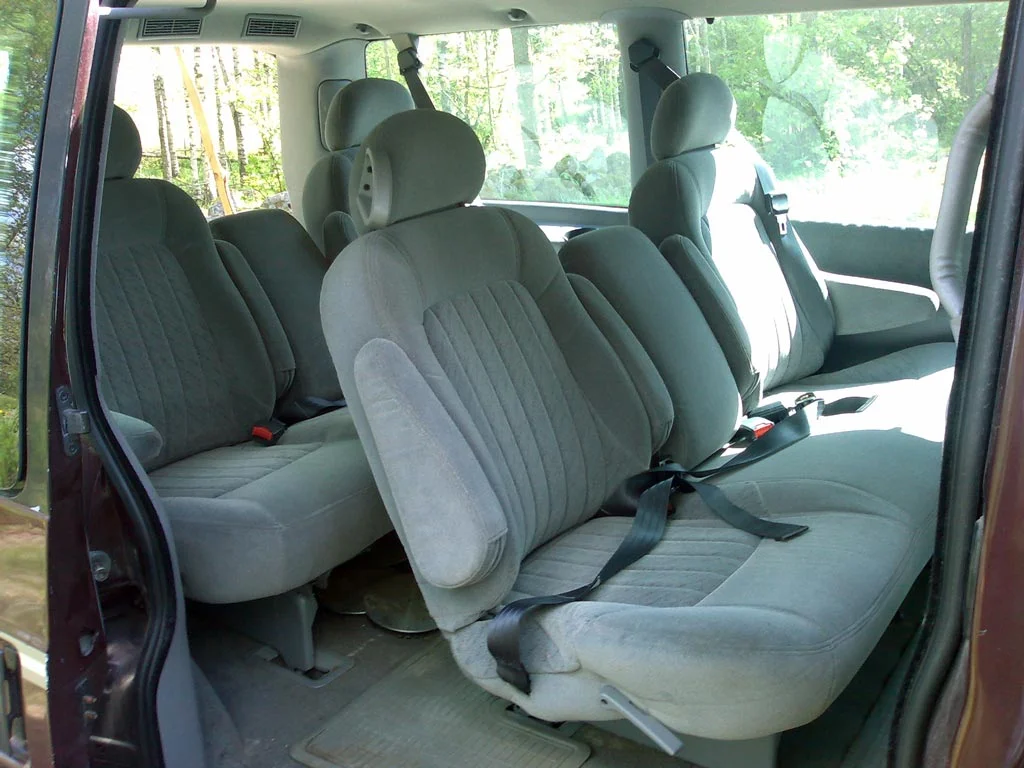
Brief Introduction of Chevrolet Astro Passenger
The Chevrolet Astro Passenger van is a versatile mid-size van that was produced by General Motors from 1985 to 2005. Often seen as a larger alternative to traditional minivans, the Astro was built on a robust, truck-like frame, which provided it with impressive towing capabilities and a commanding presence on the road. It was available in both passenger and cargo configurations, with the passenger version offering seating for up to eight occupants. The Astro spanned two main generations, with a significant refresh in 1995 that updated its exterior styling. Throughout its 20-year production run, the Astro was known for its durability, spacious interior, and the availability of an all-wheel-drive option, making it a popular choice for large families and commercial users alike.

Chevrolet Astro Passenger Overview
| Brand | Chevrolet |
| Model | Astro Passenger |
| Launch Year | 1985 |
| Price | Original MSRPs varied by year and trim; for example, the 2005 model started at $25,040. |
| Variants | LS, LT |
| Body Type | Minivan |
| Engine | Primarily a 4.3L V6 engine was used throughout its production. Earlier models also offered a 2.5L four-cylinder. |
| Power & Torque | Later models with the 4.3L V6 produced around 190 hp and 250 lb-ft of torque. |
| Transmission | Initially offered with manual and automatic options, later models came standard with a 4-speed automatic transmission. |
| Fuel Type | Gasoline |
| Mileage | Approximately 14-16 MPG in the city and 18-20 MPG on the highway for later models. |
| Colors | Various color options were available throughout its production run. |
| Safety Rating | Safety ratings varied over the years. By 2000, the NHTSA rating was three stars for the driver and four stars for the passenger in frontal crashes. Side-impact tests received a five-star rating. The IIHS rated the 1996-2005 models as “Poor” in frontal crash tests. |
| Dimensions | Approximate dimensions for later models: Length: 189.8 in, Width: 77.5 in, Height: 74.9 in. |
| Boot Space | Significant cargo space, especially with rear seats removed, reaching up to 170.4 cubic feet. |
Generations and History of Chevrolet Astro Passenger
First Generation (1985–1994)
The first generation of the Chevrolet Astro was introduced in 1985 as General Motors’ entry into the growing minivan market. Unlike its front-wheel-drive competitors, the Astro utilized a rear-wheel-drive layout based on a truck platform, which gave it a more rugged character and higher towing capacity. Initial engine options included a 98-horsepower 2.5L four-cylinder and a more powerful 4.3L V6. The interior was spacious, with seating configurations for up to eight passengers. In 1990, an all-wheel-drive (AWD) option was introduced, a first for a U.S.-built minivan, enhancing its appeal in regions with inclement weather. The first generation saw various updates, including the introduction of an extended body option in 1989 and the standardization of a 4-speed automatic transmission by 1993.
Second Generation (1995–2005)
The second generation of the Chevrolet Astro, launched in 1995, featured a significant exterior redesign with a more modern front end. All models from this generation were built on the extended-length platform of the first generation. The interior also received a major update in 1996 with a new dashboard that included a passenger-side airbag. The standard engine for this generation was the 4.3L V6, which produced around 190 horsepower. Over the years, the second generation saw further refinements, including chassis and brake upgrades in 2003, which included components from GM’s full-size pickup trucks. Despite its aging platform, the Astro remained a popular choice for those needing a durable, high-capacity vehicle. Production of the Chevrolet Astro ceased in 2005.
Latest Generation
The Chevrolet Astro Passenger van was discontinued after the 2005 model year and does not have a currently available version. General Motors cited declining sales and the high cost of updating the van to meet new safety standards as reasons for its discontinuation. There have been no official announcements from Chevrolet regarding a revival of the Astro nameplate. While there has been speculation and fan interest in a potential return, no new generation of the Chevrolet Astro has been produced.
Chevrolet Astro Passenger Facelifts and Yearly Updates
| Year | Change / Update |
| 1986 | Throttle Body Injection (TBI) was introduced for the 4.3L V6 engine. |
| 1989 | An extended body option became available, and a manual transmission was offered for the last time. |
| 1990 | All-wheel drive (AWD) became an option, and the van received a new dashboard design. |
| 1992 | An optional “Dutch door” configuration (a liftgate with two lower doors) was introduced. |
| 1993 | The 4L60E electronically controlled 4-speed automatic transmission became standard. |
| 1994 | A driver-side airbag and a center high-mount stop lamp were added as standard features. |
| 1995 | Major exterior redesign marking the start of the second generation. All models were now extended length. |
| 1996 | A redesigned interior with a new dashboard and a passenger-side airbag was introduced. |
| 1999 | A new part-time automatic AWD system was introduced. |
| 2003 | Significant chassis upgrades including larger brakes from full-size GM trucks, four-wheel disc brakes, and 16-inch wheels. |
Chevrolet Astro Passenger Variants and Features
Throughout its production, the Chevrolet Astro Passenger van was offered in various trim levels, with the most common being the base model, the mid-range LS, and the top-tier LT. The base models were fairly spartan, aimed at fleet buyers or those on a budget. The LS trim added more comfort and convenience features such as upgraded cloth upholstery, power windows and locks, and cruise control. The LT trim was the most luxurious, often including features like leather seats, premium sound systems, and rear air conditioning and heat. The interior was highly versatile, with removable rear bench seats that could free up a massive amount of cargo space. Safety features were updated over the years, with later models including dual front airbags and anti-lock brakes. Infotainment systems evolved from basic AM/FM radios to include options for cassette and CD players.
Chevrolet Astro Passenger Engine, Performance, and Driving Experience
The driving experience of the Chevrolet Astro was more akin to a truck than a modern minivan due to its body-on-frame construction. While this provided a sturdy and durable feel, the ride could be somewhat firm. The standard 4.3L V6 engine, particularly in its later iterations, offered ample power for hauling passengers and cargo, and provided a respectable towing capacity. Acceleration was adequate, though not particularly brisk. Handling was generally considered safe and predictable, but its tall stature meant it was not as nimble as its front-wheel-drive competitors. The availability of all-wheel drive was a significant advantage, providing enhanced traction and stability in various weather conditions. The 4-speed automatic transmission in later models provided smooth shifts.
Chevrolet Astro Passenger Pricing and Mileage
The Chevrolet Astro was priced competitively throughout its run, appealing to buyers who needed a large, capable vehicle without the higher price tag of a full-size van. The original Manufacturer’s Suggested Retail Price (MSRP) varied depending on the model year, trim level, and options. For example, the 2005 Astro Passenger had a starting MSRP of $25,040. Fuel efficiency was not the Astro’s strong suit, a consequence of its powerful V6 engine and heavy, truck-based platform. Later models typically achieved around 14-16 miles per gallon (MPG) in the city and 18-20 MPG on the highway. Real-world mileage could vary based on driving habits and whether the vehicle was equipped with all-wheel drive. Maintenance costs were generally considered reasonable due to the use of proven GM components shared with other trucks and SUVs.
Chevrolet Astro Passenger Colors, Design, and Dimensions
The Chevrolet Astro featured a boxy, functional design that prioritized interior space and utility. The first generation had a more traditional, squared-off look, while the second generation, introduced in 1995, had a sleeker, more rounded front end. A wide range of exterior colors were offered over the years, from basic whites and silvers to deeper reds and blues. The interior was designed to be practical, with durable materials and straightforward controls. The dimensions of the later, extended-length models were approximately 189.8 inches in length, 77.5 inches in width, and 74.9 inches in height. This size provided a spacious interior without being as cumbersome to drive and park as a full-size van.
Chevrolet Astro Passenger Safety Features
- Airbags: A driver-side airbag was made standard in 1994, followed by a passenger-side airbag in 1996.
- ABS / EBD: Rear-wheel anti-lock brakes were introduced in 1989, with four-wheel anti-lock brakes becoming available on passenger models in 1990.
- Electronic Stability Control: The Chevrolet Astro was not equipped with electronic stability control.
- Crash Test Ratings: The Astro’s crash test ratings were mixed. While it received a five-star rating for side impacts from the National Highway Traffic Safety Administration (NHTSA), its frontal crash test ratings were lower, with the 2000 model year receiving three stars for the driver and four for the passenger. The Insurance Institute for Highway Safety (IIHS) gave the 1996-2005 models a “Poor” rating in their moderate overlap front crash test.
- Other advanced safety systems: Later models included features like daytime running lamps.
Chevrolet Astro Passenger Infotainment and Connectivity
The infotainment and connectivity options in the Chevrolet Astro were reflective of the era in which it was produced. Early models came with a basic AM/FM radio, with a cassette player available as an option. As technology progressed, CD players were offered in later models. The dashboard design of the second generation was more modern and ergonomic. However, features that are common today, such as large touchscreens, Apple CarPlay, Android Auto, and navigation systems, were not available. The focus of the Astro was on practicality and utility rather than advanced in-car technology.

Chevrolet Astro Passenger Owner Reviews & Ratings
Owner reviews for the Chevrolet Astro are generally positive, with many praising its reliability, durability, and versatility. The powerful 4.3L V6 engine is often highlighted as a strong point, providing ample power for towing and hauling. The spacious interior and comfortable ride are also frequently mentioned as positive attributes. Common complaints tend to focus on the vehicle’s fuel economy, which is not as good as that of smaller, front-wheel-drive minivans. Some owners have also noted that the front passenger footwell can feel cramped due to the engine’s placement. Overall, the Astro has a loyal following of owners who appreciate its unique combination of size, capability, and longevity.
Chevrolet Astro Passenger Comparison with Similar Cars
The Chevrolet Astro occupied a unique space in the market, larger and more capable than typical minivans like the Dodge Caravan and Ford Windstar, but smaller and more maneuverable than full-size vans like the Chevrolet Express. Its truck-based, rear-wheel-drive platform gave it a significant advantage in towing capacity compared to its front-wheel-drive minivan rivals. The availability of all-wheel drive also set it apart from many competitors. However, minivans from other manufacturers often offered a more comfortable, car-like ride and better fuel economy. In terms of interior space, the Astro was very competitive, offering more room than most other minivans on the market.
Chevrolet Astro Passenger Awards and Recognition
Information not publicly available.
Interesting Facts about Chevrolet Astro Passenger
- The Chevrolet Astro and its sibling, the GMC Safari, were the first U.S.-built minivans to offer an all-wheel-drive system, which was introduced in 1990.
- Despite being marketed as a minivan, Chevrolet often promoted the Astro as a larger, more capable alternative, emphasizing its truck-based heritage.
- Over its 20-year production run, approximately 3.2 million Astro and Safari vans were produced.
- The Astro’s front suspension shared many components with the GM B-body station wagons, such as the Chevrolet Caprice.
Chevrolet Astro Passenger Legacy and Influence
The Chevrolet Astro left a lasting legacy as a durable and versatile vehicle that bridged the gap between minivans and full-size vans. Its robust construction and powerful engine made it a favorite among tradespeople, large families, and conversion van enthusiasts. The Astro’s popularity demonstrated a market for a mid-size van with truck-like capabilities, a niche that has since been filled by other vehicles. While the traditional minivan market has evolved, the Astro is remembered for its practicality, longevity, and “can-do” attitude that endeared it to a generation of owners.
Chevrolet Astro Passenger Global Availability
The Chevrolet Astro was primarily sold in the North American market, including the United States and Canada. It was manufactured at GM’s Baltimore Assembly plant in Maryland. While some Astros may have been exported to other countries through private channels, it was not officially marketed on a global scale. All models were produced as left-hand drive vehicles.
Chevrolet Astro Passenger Maintenance and Ownership Costs
The Chevrolet Astro is generally considered to be a relatively inexpensive vehicle to maintain. Its use of proven GM powertrain components, shared with other popular trucks and SUVs, means that spare parts are widely available and affordable. Regular maintenance tasks are straightforward for most mechanics. The average maintenance costs are comparable to other domestic vehicles of its era. The resale value of the Astro has remained relatively stable, particularly for well-maintained examples, due to its continued popularity in the used vehicle market, especially among those looking for a capable and affordable van for work or recreation.
Final Words about Chevrolet Astro Passenger
The Chevrolet Astro Passenger van holds a unique place in automotive history as a vehicle that successfully blended the utility of a van with the ruggedness of a truck. Its spacious interior, powerful engine, and available all-wheel drive made it a practical and versatile choice for a wide range of buyers. While it has been out of production for some time, the Astro continues to be a sought-after vehicle in the used market, a testament to its enduring appeal and reputation for durability. For those in need of a no-nonsense, capable, and spacious vehicle, the Chevrolet Astro remains a compelling option.