
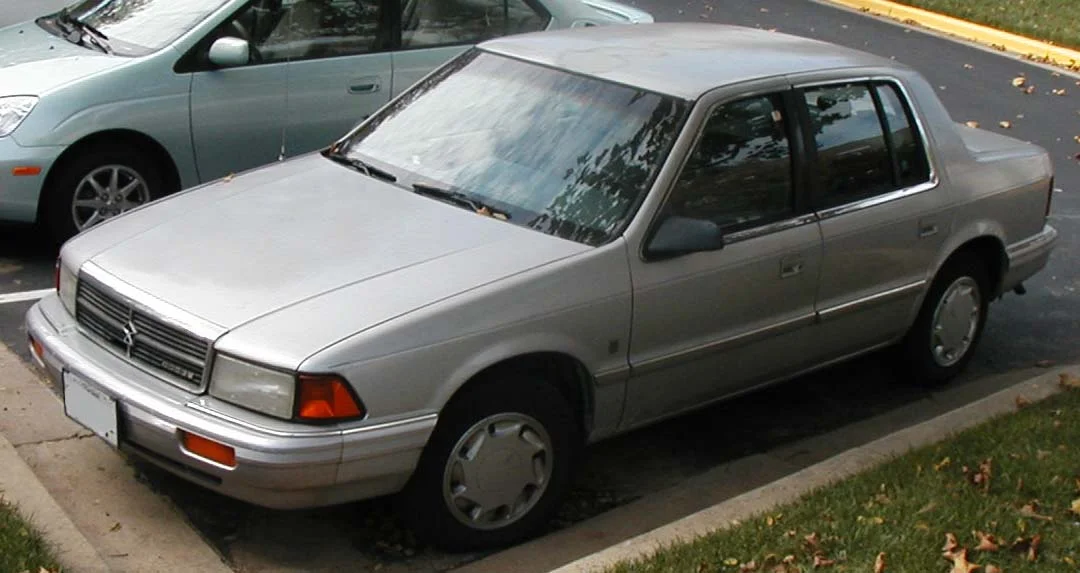
Brief Introduction of Dodge Spirit
The Dodge Spirit is a mid-size four-door sedan that was manufactured and marketed by the Dodge division of Chrysler Corporation for the 1989 to 1995 model years. As a successor to models like the Dodge 600, Aries, and Lancer, the Spirit was positioned as a practical and affordable family vehicle, competing against stalwarts like the Ford Tempo, Honda Accord, and Toyota Camry. Built on the Chrysler AA platform, an extended version of the renowned K-car architecture, the Spirit emphasized interior space, reliability, and value. Over its single-generation run, it was offered in several variants, from the economical base model to the surprisingly potent and now legendary Spirit R/T, making it a noteworthy vehicle in Dodge’s history. The Spirit shared its platform with the Plymouth Acclaim and the Chrysler LeBaron sedan.

Dodge Spirit Overview
| Brand | Dodge (Chrysler Corporation) |
| Model | Spirit |
| Launch Year | 1989 (for the 1990 model year) |
| Price | Original MSRP for the R/T variant was $17,820. |
| Variants | Base, LE, ES, R/T |
| Body Type | 4-door sedan |
| Engine | 2.5L K I4, 2.5L K Turbo I4, 3.0L Mitsubishi 6G72 V6, 2.2L Turbo III I4 (R/T) |
| Power & Torque | 100 hp to 224 hp; 135 lb-ft to 217 lb-ft of torque |
| Transmission | 3-speed automatic (A413), 4-speed automatic (A604), 5-speed manual (A523, A568) |
| Fuel Type | Gasoline (A flexible-fuel version was also offered) |
| Mileage | Approximately 17-22 MPG city / 24-30 MPG highway, depending on engine |
| Colors | Included Bright White, Colorado Red, Black, Dark Silver Metallic, and others |
| Safety Rating | NHTSA crash test ratings varied; a 1992 model scored 3 stars for driver and 5 stars for passenger frontal impact |
| Dimensions | Length: 181.2 in (4,602 mm), Width: 68.1 in (1,730 mm), Height: 53.5 in (1,359 mm) |
| Boot Space | 14.4 cubic feet |
Generations and History of Dodge Spirit
First Generation (1989-1995)
The Dodge Spirit was produced over a single, continuous generation, debuting in January 1989 as a 1990 model year vehicle. It was built on the Chrysler AA platform, a stretched and refined version of the highly successful K-car platform that had saved the company in the 1980s. The Spirit was conceived as a mainstream mid-size sedan, offering generous interior space that could accommodate up to six passengers with an optional front bench seat. Its design was a conventional three-box sedan, prioritizing practicality and functionality over aggressive styling. The suspension setup consisted of MacPherson struts at the front and a solid-beam axle at the rear, providing a comfortable and predictable ride. From its launch, the Spirit offered a range of powertrain choices, including a standard 2.5L inline-four, an optional Mitsubishi-sourced 3.0L V6, and a turbocharged 2.5L four-cylinder, which was standard on the sporty ES trim. The Spirit was discontinued after the 1995 model year, replaced by the Dodge Stratus.
Dodge Spirit Facelifts and Yearly Updates
| Year | Change / Update |
| 1990 | A driver-side airbag was made standard equipment early in the model year. |
| 1991 | The high-performance R/T model was introduced, featuring a 224 hp Turbo III engine. An anti-lock braking system (ABS) on all four wheels became an option. |
| 1992 | The Spirit R/T received revised gear ratios for quicker acceleration and suspension retuning for better handling. A 3-speed automatic became available with the V6 engine. |
| 1993 | The Spirit received a facelift that included a new body-color grille with Dodge’s crosshair design and new full-width taillamps. Turbocharged engines were discontinued for non-R/T models, and trim levels were simplified. |
| 1994 | To comply with U.S. federal safety standards, a motorized front passenger seat belt was added. Side-impact protection beams were also improved. |
| 1995 | In its final year, the optional 4-speed automatic and ABS were dropped. The base 2.5L engine received a minor cylinder head revision. |
Dodge Spirit Variants and Features
The Dodge Spirit was available in several distinct trims throughout its lifespan, catering to a range of buyers from the economy-minded to performance enthusiasts.
Base
The entry-level model provided essential transportation with the standard 2.5L four-cylinder engine. It featured bucket seats, with a bench seat available as an option for six-passenger capacity. Its features were modest, aimed at delivering value and reliability.
LE
The “Luxury Edition” trim added more comfort and convenience features over the base model. These often included upgraded cloth upholstery, additional power accessories, and more refined interior trim pieces, making it a popular choice for families.
ES
The “Euro Sport” variant was the sport-oriented model before the R/T’s arrival. It came standard with a 150 hp turbocharged 2.5L engine (until 1992), a sport-tuned suspension, alloy wheels, and distinct exterior styling cues for a more aggressive look.
R/T
Available only in 1991 and 1992, the R/T was the pinnacle of Spirit performance. It featured the exclusive 2.2L “Turbo III” DOHC 16-valve engine with a Lotus-designed cylinder head, producing an impressive 224 horsepower. Mated exclusively to a heavy-duty 5-speed manual Getrag-geared transmission, it also came with four-wheel disc brakes, a performance-tuned suspension, a unique body kit with a spoiler, and color-keyed 15-inch alloy wheels. This variant transformed the modest sedan into one of the quickest front-wheel-drive cars of its era.
Dodge Spirit Engine, Performance, and Driving Experience
The driving experience of the Dodge Spirit varied significantly depending on the engine.
- 2.5L K I4: This was the standard engine, producing 100 horsepower. It provided adequate, reliable power for daily commuting and was known for its durability.
- 3.0L Mitsubishi V6: An optional upgrade, this engine delivered a smoother 141 horsepower, offering more refined acceleration and better performance for highway driving. It was primarily paired with an automatic transmission.
- 2.5L K Turbo I4: Standard on the ES model until 1992, this engine produced 150 horsepower, giving the sedan a much livelier feel with noticeably quicker acceleration than its naturally aspirated counterparts.
- 2.2L Turbo III I4 (R/T): The heart of the R/T was a powerhouse. With 224 horsepower and 217 lb-ft of torque, it could propel the Spirit from 0 to 60 mph in just 5.8 seconds, according to *Car and Driver*. This made it faster than many contemporary sports cars and earned it the title of the quickest sedan sold in America at the time. Despite its power, torque steer was present but managed through suspension enhancements.
Dodge Spirit Pricing and Mileage
Upon its launch, the Dodge Spirit was positioned as an affordable family sedan. The high-performance 1991 Spirit R/T had a base price of $17,820, which was considered a bargain for the level of performance it offered. Fuel efficiency was respectable for its class and era. The standard 2.5L engine paired with a manual transmission could achieve around 22 MPG in the city and 30 MPG on the highway. The more powerful 3.0L V6 offered slightly lower figures, while the high-strung R/T model was rated at approximately 17 MPG in the city and 24 MPG on the highway. Running costs were generally low, especially for the non-turbo models, due to the widespread availability and affordability of parts from the K-car platform.
Dodge Spirit Colors, Design, and Dimensions
The exterior design of the Dodge Spirit was a product of its time, featuring a boxy, traditional sedan silhouette. The 1993 facelift introduced a more modern, body-colored crosshair grille and updated taillights. Available colors included Bright White, Colorado Red, Black, and various metallic finishes like Platinum Silver and Diamond Blue. The sporty ES and R/T models featured unique color-keyed “snowflake” alloy wheels. Inside, the layout was straightforward and functional, with a focus on maximizing passenger and cargo space. With a wheelbase of 103.5 inches and an overall length of 181.2 inches, it offered ample room for its class.
Dodge Spirit Safety Features
For its time, the Dodge Spirit was equipped with contemporary safety features. It was one of the early affordable sedans to offer a standard driver-side airbag starting with the 1990 model year. Other key safety systems included:

- Anti-lock Brakes (ABS): An optional four-wheel ABS was available from 1991 onwards, enhancing driver control during hard braking.
- Motorized Seatbelts: To meet passive restraint requirements, 1994 models featured a motorized front passenger seatbelt, while Canadian models retained manual belts.
- Crash Test Ratings: The National Highway Traffic Safety Administration (NHTSA) ratings for a 1992 model showed a 3-star rating for the driver’s side and a 5-star rating for the passenger’s side in a frontal crash test.
- Child Safety: While lacking modern child seat anchors, later models included rear door child safety locks.
Dodge Spirit Infotainment and Connectivity
The infotainment systems in the Dodge Spirit were typical of the early 1990s. The standard setup included an AM/FM radio and often a cassette player. Higher trim levels and optional packages offered upgrades such as an Infinity premium sound system with better speakers and, in later years, a CD player. The top-tier R/T model included a trip computer and message center as standard. There were no advanced connectivity features like Bluetooth or touchscreens, which were not available in mainstream vehicles during this period.
Dodge Spirit Owner Reviews & Ratings
Owner feedback for the Dodge Spirit is generally mixed but leans positive, particularly concerning its reliability and value. Many owners praise the durability of the 2.5L four-cylinder engine and the car’s spacious, comfortable interior. The Spirit is often described as an inexpensive and dependable vehicle to own and maintain. However, common complaints include issues with the electronically controlled 4-speed A604 “Ultradrive” automatic transmission, peeling paint on later models, and some electrical problems. The high-performance R/T model is highly regarded by enthusiasts for its “sleeper” status and incredible performance, though parts for its specialized engine can be difficult to find.
Dodge Spirit Comparison with Similar Cars
In the competitive mid-size sedan market of the early 1990s, the Dodge Spirit held its own, primarily on the basis of value and performance options. Its main competitors included:
- Ford Tempo/Taurus: The Spirit was sized similarly to the Tempo but often compared to the larger Taurus. While the Taurus offered a more modern design, the Spirit provided comparable interior space at a lower price point. The Spirit R/T was a direct competitor to the high-performance Ford Taurus SHO, offering quicker acceleration at a more affordable price.
- Honda Accord & Toyota Camry: These Japanese rivals were benchmarks for quality and refinement. While the Accord and Camry generally offered superior build quality and a more polished driving experience, the Spirit was significantly less expensive and offered the powerful V6 and turbo engine options that its competitors lacked in their base trims.
- Chevrolet Corsica: A domestic rival from GM, the Corsica was very similar to the Spirit in concept—an affordable, practical, front-wheel-drive sedan. Both cars competed fiercely for fleet and family sales, with the Spirit often praised for its roomier interior.
Dodge Spirit Awards and Recognition
The Dodge Spirit, particularly its high-performance variant, received accolades from automotive publications.
- Motor Trend’s “Domestic Sport Sedan of the Year”: The Dodge Spirit R/T was named Motor Trend’s “Domestic Sport Sedan of the Year” for both 1991 and 1992, beating its main rival, the Ford Taurus SHO.
Interesting Facts about Dodge Spirit
- The Spirit R/T’s 2.2L Turbo III engine featured a DOHC cylinder head designed by Lotus.
- With a top speed of over 140 mph, the Spirit R/T was one of the fastest mass-produced four-door sedans in the world in 1991.
- The “Spirit” name was previously used by American Motors Corporation (AMC) for a subcompact car from 1979 to 1983, a company Chrysler acquired in 1987.
- All Spirit R/T models for the U.S. market were assembled in Mexico.
- A very limited number of Spirit R/Ts were produced: 1,208 in 1991 and only 191 in 1992 for the U.S. market.
Dodge Spirit Legacy and Influence
The Dodge Spirit played a crucial role for Chrysler in the late 1980s and early 1990s as a dependable, high-volume seller that bridged the gap between the original K-cars and the revolutionary “cab-forward” design of its successor, the Dodge Stratus. It successfully catered to both families seeking practical transportation and, with the R/T model, to performance enthusiasts. The Spirit R/T, in particular, has achieved a cult classic status as a definitive “sleeper” sedan—a modestly styled car with extraordinary performance. It demonstrated Chrysler’s engineering prowess and kept the Dodge brand relevant in the affordable performance conversation.
Dodge Spirit Global Availability
The Dodge Spirit was primarily sold in the North American market, including the United States and Canada. However, it also had a significant presence in Mexico, where it was marketed as the Chrysler Spirit, as the Dodge brand was reserved for trucks at the time. The Mexican market received unique variants, including an R/T model with a turbocharged 2.5L 8-valve engine that was popular with police departments. The top-tier DOHC R/T in Mexico could be ordered with more options like leather upholstery and in more colors than its U.S. counterpart. A version of the Spirit was also exported to Europe, where it was sold as the Chrysler Saratoga.
Dodge Spirit Maintenance and Ownership Costs
The Dodge Spirit is generally considered an affordable car to maintain, with an estimated annual maintenance cost of around $358. This low cost is largely due to the shared platform and components with many other Chrysler vehicles, making spare parts widely available and inexpensive. The base 2.5L engine is known for its simplicity and reliability. However, some owners have reported issues with the A604 automatic transmission, which can be costly to repair. The specialized Turbo III engine in the R/T requires more careful maintenance, and some of its unique parts may be harder to source today, potentially leading to higher ownership costs for that specific variant.
Final Words about Dodge Spirit
The Dodge Spirit stands as a testament to the practical, value-driven engineering of its era, successfully serving as a reliable workhorse for countless families. While its conventional design may not turn heads today, its blend of interior space, comfort, and affordability made it a popular choice throughout its production run. More than just a sensible sedan, the Spirit lineup was crowned by the extraordinary R/T variant—a true factory sleeper that offered supercar-like acceleration in an unassuming package. This duality is the Spirit’s enduring legacy: a car that was simultaneously a pragmatic daily driver and, for a select few, one of the most exciting performance sedans of the 1990s. Its successor, the Dodge Stratus, would usher in a new design language, but the Spirit remains a fondly remembered chapter in Dodge’s history.