
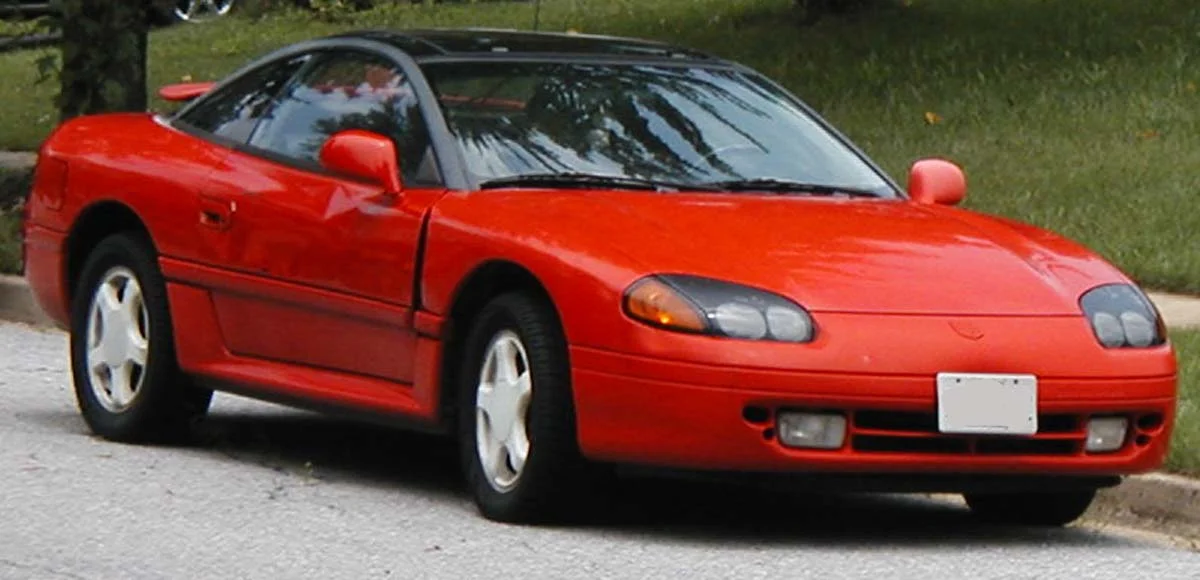
Brief Introduction of Dodge Stealth
The Dodge Stealth is a sports car that was sold by Dodge from 1991 to 1996. It was a result of a partnership between Chrysler and Mitsubishi Motors. A captive import, the Stealth was mechanically identical to the Mitsubishi 3000GT. The car was designed as a 2+2 hatchback coupe and grand tourer, offering both front-wheel and all-wheel-drive options. The Dodge Stealth was noteworthy for its aggressive styling and the advanced technology available in its top-tier models, which aimed to compete with other Japanese sports cars of the era like the Toyota Supra, Nissan 300ZX, and Mazda RX-7. Its popularity stemmed from its powerful performance variants, particularly the R/T Turbo, and its distinctive design that set it apart from its Mitsubishi counterpart. The Stealth was available in several generations and variants throughout its production run, each with its own set of features and updates.

Dodge Stealth Overview
| Brand | Dodge |
| Model | Stealth |
| Launch Year | 1991 |
| Price | Original MSRP ranged from approximately $18,438 to $37,894 depending on the year and trim. |
| Variants | Base, ES, R/T, R/T Turbo. |
| Body Type | 2-door liftback coupe. |
| Engine | 3.0L SOHC V6, 3.0L DOHC V6, 3.0L DOHC Twin-Turbocharged V6. |
| Power & Torque | 164 hp & 185 lb-ft (SOHC V6), 222 hp & 201 lb-ft (DOHC V6), 300-320 hp & 307-315 lb-ft (Twin-Turbo V6). |
| Transmission | 5-speed manual, 6-speed manual (from 1994 on R/T Turbo), 4-speed automatic. |
| Fuel Type | Gasoline |
| Mileage | Approximately 18-21 MPG combined. |
| Colors | Black, White Pearl Metallic, Wheat Beige Metallic, White, Bright Blue Metallic, Scarlet Red. |
| Safety Rating | Not publicly available (pre-dates modern standardized crash testing). |
| Dimensions | Length: 179.1-180.5 in, Width: 72.4 in, Height: 49.1 in. |
| Boot Space | Approximately 11.6 cubic feet. |
Generations and History of Dodge Stealth
The Dodge Stealth was produced for a single generation, spanning from the 1991 to 1996 model years. However, it received a significant facelift in 1994, which is often considered the dividing line between two distinct periods of its production.
First Generation (1991-1993)
The first-generation Dodge Stealth was introduced in 1991 as a collaboration between Chrysler and Mitsubishi. Chrysler was responsible for the exterior styling, while the car was manufactured by Mitsubishi in Japan. The Stealth was mechanically identical to the Mitsubishi 3000GT. For its debut year, four trim levels were available: Base, ES, R/T, and the high-performance R/T Turbo. The base model was equipped with a 3.0-liter SOHC 12-valve V6 engine that produced 164 horsepower. Both the ES and R/T models featured a more powerful 3.0-liter DOHC 24-valve V6 engine with 222 horsepower. These three variants were front-wheel drive and came standard with a 5-speed manual transmission, with a 4-speed automatic as an option. The top-of-the-line R/T Turbo was powered by a 3.0-liter DOHC twin-turbocharged V6 engine that generated 300 horsepower and 307 lb-ft of torque. The R/T Turbo came standard with all-wheel drive and a 5-speed manual transmission. Key features of the early Stealth R/T Turbo included four-wheel steering, electronically controlled suspension, and an active exhaust system.
Second “Generation” (1994-1996 Facelift)
For the 1994 model year, the Dodge Stealth received a significant facelift. One of the most noticeable changes was the replacement of the pop-up headlights with fixed projector units. The front and rear bumpers were also restyled for a more modern and rounded appearance. The ES trim level was discontinued, leaving the Base, R/T, and R/T Turbo models. The R/T Turbo received a power increase to 320 horsepower and 315 lb-ft of torque. It was also equipped with a new 6-speed manual transmission. A passenger-side airbag was added to all models for enhanced safety. The 1996 model year marked the final year of production for the Dodge Stealth. For its last year, the Stealth received a body-colored spoiler and larger 18-inch wheels were available.
Latest Generation
The Dodge Stealth was discontinued after the 1996 model year and there are currently no new generations or versions available. All Dodge Stealth models are now considered classic or used vehicles.
Dodge Stealth Facelifts and Yearly Updates
| Year | Change / Update |
| 1992 | An optional glass sunroof was made available. |
| 1993 | The ES and R/T models received several new features. The R/T Turbo could be ordered with chrome wheels, and remote keyless entry and a CD changer became new options. Halfway through the year, the R/T Turbo models were equipped with larger brake rotors and two-piston rear calipers. A four-bolt main and forged crank were also introduced for the engine. |
| 1994 | Major facelift with new projector headlights and restyled front and rear bumpers. The ES model was discontinued. The R/T Turbo’s engine output was increased to 320 horsepower and 315 lb-ft of torque, and it was paired with a new 6-speed manual transmission. A passenger-side airbag was added to all models. An R/T Luxury model was also available. The sound system was upgraded. |
| 1995 | Dual airbags became standard on all models. Optional 18-inch chrome wheels were introduced. |
| 1996 | A new body-colored rear spoiler was added. This was the final year of production for the Dodge Stealth. |
Dodge Stealth Variants and Features
The Dodge Stealth was offered in several distinct variants throughout its production run, each catering to different performance and feature preferences.
Base
The entry-level Base model featured a 3.0L SOHC V6 engine producing 164 horsepower and was front-wheel drive. Standard features included an AM/FM/cassette stereo system and a leather-wrapped tilt steering wheel. The interior of the Base model often came with manual air conditioning controls and cloth seats.
ES
Available from 1991 to 1993, the ES model shared the same 3.0L DOHC V6 engine with the R/T, producing 222 horsepower. It was also a front-wheel-drive model. The ES offered a step up from the base model in terms of performance but shared many of its interior features.
R/T
The R/T (Road/Track) trim level was also powered by the 222-horsepower 3.0L DOHC V6 and featured front-wheel drive. Leather seats were an available option for the R/T.
R/T Turbo
The flagship R/T Turbo was the most powerful and technologically advanced variant. It boasted a twin-turbocharged 3.0L DOHC V6, initially producing 300 horsepower and later upgraded to 320 horsepower. Standard on the R/T Turbo was a full-time all-wheel-drive system, four-wheel steering, and an electronically controlled suspension. Inside, the R/T Turbo had a speedometer that went up to 180 mph, in contrast to the 160 mph speedometer in the other trims. Leather seats and digital climate control were also available options.
Dodge Stealth Engine, Performance, and Driving Experience
The Dodge Stealth offered a range of driving experiences depending on the chosen variant and its powertrain.
Engine and Performance
The base engine was a 3.0-liter SOHC V6 with 164 horsepower, providing adequate performance for daily driving. The naturally aspirated 3.0-liter DOHC V6 in the ES and R/T models delivered a more spirited 222 horsepower. The star of the lineup was the R/T Turbo’s twin-turbocharged 3.0-liter DOHC V6. Initially producing 300 horsepower, this engine was later boosted to 320 horsepower in 1994. This potent engine, combined with the standard all-wheel-drive system, allowed the R/T Turbo to achieve impressive acceleration, with a 0-60 mph time of around 5.3 seconds.
Transmission and Drivetrain
The base, ES, and R/T models came with a standard 5-speed manual transmission, with a 4-speed automatic as an option. These models were all front-wheel drive. The R/T Turbo, on the other hand, was exclusively available with a manual transmission – a 5-speed from 1991 to 1993, and a 6-speed from 1994 to 1996. It also featured a standard full-time all-wheel-drive system with a 45/55 front-to-rear torque split and a limited-slip differential.

Suspension and Handling
The Dodge Stealth featured a four-wheel independent suspension system. The R/T Turbo model included an advanced electronically controlled suspension, which allowed the driver to adjust the ride firmness. Additionally, the R/T Turbo’s four-wheel steering system would turn the rear wheels in the same direction as the front wheels at speeds over 30 mph to improve stability during high-speed lane changes. This combination of features gave the R/T Turbo excellent handling and grip, especially for its time.
Dodge Stealth Pricing and Mileage
The original pricing of the Dodge Stealth varied significantly depending on the model year and trim level. In its debut year, the base model started at around $18,438, while the top-of-the-line R/T Turbo was priced at approximately $29,860. By 1994, the price for an R/T Turbo had risen to nearly $38,000. In terms of fuel efficiency, the base models with the SOHC engine offered the best mileage, with an EPA estimate of around 19 city and 25 highway MPG. The DOHC V6 models had slightly lower ratings. The high-performance R/T Turbo was the least fuel-efficient, with an EPA rating of approximately 18 city and 24 highway MPG with all-wheel drive. Real-world mileage would, of course, vary based on driving habits and conditions.
Dodge Stealth Colors, Design, and Dimensions
The Dodge Stealth was available in a variety of colors throughout its production, including Black, White Pearl Metallic, Wheat Beige Metallic, White, Bright Blue Metallic, and Scarlet Red. The exterior design of the Stealth was a key selling point, featuring a sleek and aggressive look with a low drag coefficient of 0.33. The first-generation models (1991-1993) were characterized by their pop-up headlights, while the second-generation models (1994-1996) had fixed projector headlights and smoother bumpers. The overall dimensions of the Stealth were a length of approximately 179.1 to 180.5 inches, a width of 72.4 inches, and a height of around 49.1 inches. The wheelbase was 97.2 inches. The R/T and R/T Turbo models featured more aggressive styling cues, such as side air vents and a rear spoiler. The wheel sizes varied by trim, with base and R/T models having 15-inch wheels, while the R/T Turbo came with 17-inch wheels, and later, optional 18-inch chrome wheels.
Dodge Stealth Safety Features
- Airbags: Dual airbags were standard on all models from 1995 onwards. A passenger-side airbag was added in 1994.
- ABS / EBD: Anti-lock brakes (ABS) were standard on the R/T Turbo and optional on other models.
- Electronic Stability Control: The Dodge Stealth was not equipped with electronic stability control.
- Crash Test Ratings: No comprehensive crash test ratings from agencies like the NHTSA or IIHS are publicly available for the Dodge Stealth, as it predates many of the modern, standardized testing protocols.
- Other advanced safety systems: The R/T Turbo’s all-wheel-drive system provided enhanced traction and stability in various driving conditions.
Dodge Stealth Infotainment and Connectivity
For its time, the Dodge Stealth offered a respectable range of infotainment and connectivity features. Standard on all models was an AM/FM/cassette stereo system. An optional CD player and later a CD changer were available for those seeking higher-quality audio. The top-tier R/T Turbo models could be equipped with a premium sound system. While features like Apple CarPlay, Android Auto, navigation, and wireless charging were not available during the Stealth’s production run, some models did offer steering wheel-mounted audio controls, which was an advanced feature for the early 1990s.
Dodge Stealth Owner Reviews & Ratings
Owner reviews for the Dodge Stealth are generally positive, particularly for the high-performance R/T Turbo models. Many owners praise the car’s distinctive and aggressive styling, powerful acceleration, and excellent handling, especially in the all-wheel-drive R/T Turbo. The car’s long list of advanced features for its time is also a frequent point of praise. However, some owners have reported that the car can be expensive to maintain and repair, with parts being costly and sometimes difficult to find. The automatic transmissions in the non-turbo models have also been a source of some reliability concerns for some owners. The rear seats are also noted to be very small and not suitable for adults. Despite these potential drawbacks, many owners express a strong emotional attachment to their Stealths, viewing them as unique and exciting sports cars of the 1990s.
Dodge Stealth Comparison with Similar Cars
During its production, the Dodge Stealth competed with a number of other popular sports cars. Its primary competitors included the Toyota Supra, Nissan 300ZX, and Mazda RX-7. Compared to these rivals, the Dodge Stealth R/T Turbo offered the advantage of standard all-wheel drive, which provided superior traction and all-weather capability. In terms of performance, the R/T Turbo was very competitive, with its twin-turbo V6 putting it in the same league as the turbocharged versions of the Supra and 300ZX. The Stealth’s sibling, the Mitsubishi 3000GT, was its closest competitor, being mechanically identical. The main differences between the Stealth and the 3000GT were their exterior styling and the fact that the 3000GT was available as a convertible, an option not offered on the Stealth. In terms of price, the Stealth was often seen as a more affordable alternative to some of its Japanese rivals, offering a high level of performance and features for the money.
Dodge Stealth Awards and Recognition
- The 1991 Dodge Stealth R/T Turbo was selected to be the pace car for the 1991 Indianapolis 500, though this was later changed due to controversy over it being a Japanese-manufactured car.
Interesting Facts about Dodge Stealth
- The Dodge Stealth was a “captive import,” meaning it was a vehicle built by a foreign manufacturer (Mitsubishi) and sold under the brand of a domestic automaker (Dodge).
- Despite being sold as a Dodge, the Stealth was manufactured entirely in Nagoya, Japan, alongside its Mitsubishi 3000GT counterpart.
- The name “Stealth” was chosen to evoke a sense of mystery, speed, and advanced technology, similar to the stealth aircraft of the time.
- The side mirrors used on the Dodge Stealth and Mitsubishi 3000GT were the same as those used on the Dodge Viper.
Dodge Stealth Legacy and Influence
The Dodge Stealth played a significant role in the sports car market of the 1990s. It, along with its Mitsubishi 3000GT sibling, was a showcase of advanced automotive technology for its time, with features like all-wheel drive, four-wheel steering, and electronically controlled suspension being uncommon in its price range. The Stealth helped to bolster Dodge’s image as a performance brand during a period when the American auto industry was in a state of transition. While it was not as commercially successful as some of its competitors, the Stealth has developed a cult following among enthusiasts who appreciate its unique styling, powerful performance, and technological sophistication. It remains a notable example of the collaboration between American and Japanese automakers in the late 20th century.
Dodge Stealth Global Availability
The Dodge Stealth was primarily sold in the North American market, specifically the United States and Canada. As a rebadged version of the Mitsubishi 3000GT, which was sold globally (and as the GTO in Japan), the Stealth itself was a region-specific model. All Dodge Stealths were manufactured in Nagoya, Japan, and were only produced in a left-hand drive configuration for the North American market.
Dodge Stealth Maintenance and Ownership Costs
The annual maintenance cost for a Dodge Stealth can vary depending on the condition of the vehicle, with estimates ranging from around $348 to $469. Major services, such as the 60,000-mile tune-up which often includes a timing belt replacement, can be particularly expensive, with some owners reporting costs of around $1,000. Parts for the Dodge Stealth, especially for the more complex R/T Turbo models, can be expensive and sometimes difficult to source. Common issues that owners have reported include oil leaks from the transfer case on all-wheel-drive models and some electrical problems. Due to its age and the complexity of its systems, owning a Dodge Stealth can be more demanding in terms of maintenance compared to a more modern vehicle. However, well-maintained examples can be reliable.
Final Words about Dodge Stealth
The Dodge Stealth remains a captivating and memorable sports car from the 1990s. Its aggressive styling, potent performance, and advanced technology set it apart from many of its contemporaries. For buyers looking for a classic sports car with a unique design and a high level of performance for its era, the Dodge Stealth, particularly the R/T Turbo model, presents an appealing option. While ownership can come with the challenges of maintaining an older, complex vehicle, the rewarding driving experience and the dedicated enthusiast community can make it a worthwhile endeavor. The Dodge Stealth’s legacy is that of a bold and technologically ambitious sports car that offered a unique blend of American design and Japanese engineering.