
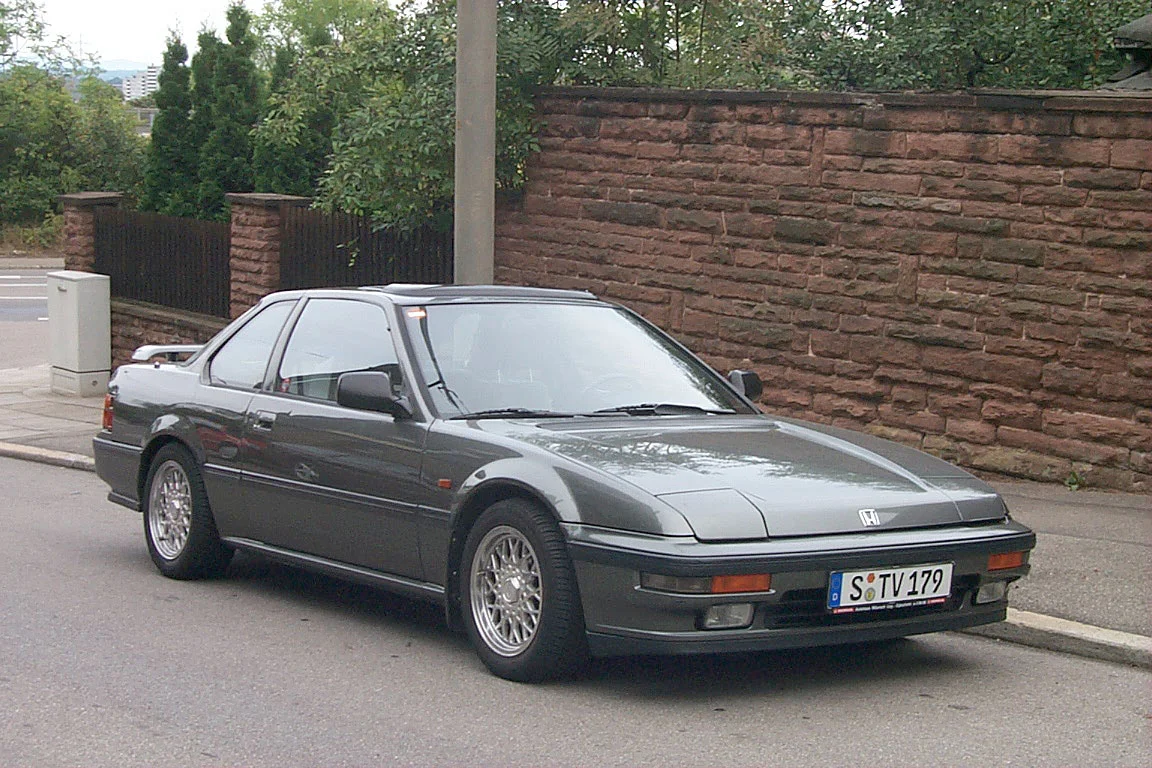
Brief Introduction of Honda Prelude
The Honda Prelude is a celebrated sport compact coupe produced by Japanese automaker Honda over five generations from 1978 to 2001. Renowned for its blend of style, performance, and cutting-edge technology, the Prelude carved a unique niche in the automotive world. It was often used by Honda to introduce new features, such as the first power moonroof in a Honda vehicle and the world’s first mechanical four-wheel steering system in a mass-production car. As a two-door coupe loosely derived from the Accord, the Prelude appealed to drivers seeking a sportier, more engaging experience than a standard sedan. Its multiple generations saw significant evolution in design and engineering, from the boxy beginnings of the first generation to the VTEC-powered performance of later models. After a long hiatus, Honda has announced the return of the Prelude as a hybrid sports model, signaling a new chapter for the iconic nameplate.

Honda Prelude Overview
| Brand | Honda |
| Model | Prelude |
| Launch Year | 1978 (Discontinued in 2001, returning in 2026) |
| Price | Last MSRP in 2001 was approx. $23,595+ / Upcoming 2026 model estimated around $43,195 |
| Variants | S, Si, Si-VTEC, SH, Type S (historical); Single trim expected for 2026 model |
| Body Type | 2-door Coupe |
| Engine | 2.2L H22A4 VTEC I4 (Last model) / 2.0L e:HEV Hybrid (Upcoming model) |
| Power & Torque | 195-200 hp, 156 lb-ft (Last model) / ~200 hp (Upcoming model) |
| Transmission | 5-speed manual, 4-speed automatic (Last model) / CVT with paddle shifters (Upcoming model) |
| Fuel Type | Gasoline (historical) / Hybrid (upcoming) |
| Mileage | Approx. 23 MPG combined (Last model) / Information not disclosed (Upcoming model) |
| Colors | Flamenco Black Pearl, Milano Red, Frost White (historical examples) / Winter Frost Pearl (Upcoming model) |
| Safety Rating | Not publicly available for older models. |
| Dimensions | Approx. 4,522 mm L x 1,752 mm W x 1,315 mm H (Last model) |
| Boot Space | Approx. 246 L (Last model) |
Generations and History of Honda Prelude
First Generation (1978–1982)
Launched in Japan on November 24, 1978, the first-generation Prelude was based on the Accord platform but featured a new, sportier chassis. It was designed to be a stylish and nimble coupe, and it introduced a power moonroof as a standard feature, which would become a signature element for the model. The initial engine was a 1.7-liter four-cylinder producing around 72 horsepower. While not a powerful car, with a 0-60 mph time of nearly 19 seconds, it established the Prelude as a comfortable and well-equipped personal coupe. Transmissions included a standard 5-speed manual and an optional 2-speed “Hondamatic” automatic, later upgraded to a 3-speed.
Second Generation (1982–1987)
The second generation, released in late 1982, marked a significant departure from its predecessor with a much more modern, angular design featuring iconic pop-up headlights. This redesign lowered the front end, contributing to a sleek wedge shape and improved aerodynamics. Power was substantially increased with a new 1.8-liter engine making 100 horsepower. This generation introduced the sporty “Si” trim, which featured a 2.0-liter DOHC engine with fuel injection. The suspension was upgraded to a double wishbone setup in the front, greatly improving its handling and turning the Prelude into a nimble performer.
Third Generation (1987–1991)
Released in 1987, the third generation featured an evolutionary design with styling cues reminiscent of the Honda NSX. The most groundbreaking feature of this generation was the introduction of the world’s first mechanical four-wheel steering (4WS) system on a mass-production car. This innovative system improved both low-speed maneuverability and high-speed stability, earning the Prelude widespread acclaim for its handling. In fact, a 1988 Prelude 2.0Si 4WS outperformed many exotic sports cars in slalom tests. Power came from variants of the B20A engine, including DOHC versions that produced up to 140 horsepower in the US market.
Fourth Generation (1991–1996)
The fourth-generation Prelude, introduced in 1991, brought a radical new design. The body was more rounded and curvaceous, and it ditched the pop-up headlights for fixed units. A futuristic dashboard with a “Concentrated Target Meter” display was a notable interior feature, though it was later replaced with a more conventional layout. This generation is famous for bringing Honda’s VTEC (Variable Valve Timing and Lift Electronic Control) technology to the Prelude. The top-tier VTEC model featured the 2.2-liter H22A1 engine, producing 190 horsepower, a significant jump in performance. Base models were equipped with either a 2.2-liter SOHC or a 2.3-liter DOHC engine.
Fifth Generation (1996–2001)
The fifth and final production generation returned to a more squared-off, traditional design. In the North American market, all models were powered by the 2.2-liter H22A4 VTEC engine, producing 195 horsepower with an automatic transmission and 200 hp with a manual. The standout model was the Type SH (“Super Handling”), which featured Honda’s innovative Active Torque Transfer System (ATTS). ATTS was an early form of torque vectoring, capable of sending more power to the outside front wheel during cornering to reduce understeer and improve handling dynamics. Despite its technological prowess, sales of the Prelude declined, leading to its discontinuation after the 2001 model year.
Latest Generation (Concept)
At the 2023 Japan Mobility Show, Honda surprised the automotive world by unveiling the Prelude Concept, confirming the nameplate’s return. This upcoming sixth generation, expected for the 2026 model year, will be a hybrid sports coupe. It is reported to share a powertrain with the Civic Hybrid, featuring a 2.0-liter gasoline engine combined with electric motors to produce around 200 horsepower. While it will not offer a traditional manual transmission, it will introduce a new “S+ Shift” system with paddle shifters to simulate gear changes. The design is sleek and modern, blending a low-slung coupe profile with a practical hatchback design.
Honda Prelude Facelifts and Yearly Updates
First Generation (SN)
| Year | Change / Update |
| 1981 | Received a facelift with a new grille and stainless steel trim on the bumpers and side moldings. The dashboard was updated to a more traditional design. |
Second Generation (AB/BA1/2/3)
| Year | Change / Update |
| 1985 | Introduction of the “Si” model with a fuel-injected 2.0L DOHC engine. |
| 1986 | Minor cosmetic updates to tail lights and front bumper for some markets. |
Third Generation (BA3/4/5/7)
| Year | Change / Update |
| 1990 | A minor facelift included revised rear taillights and updates to the front bumper and indicators. Introduction of the 2.1-liter B21A1 engine for the Si model in the US, increasing power to 140 hp. The Japanese market saw the introduction of the Prelude INX model with fixed headlights. |
Fourth Generation (BA8/9/BB1-4)
| Year | Change / Update |
| 1994 | Mid-cycle refresh included updates to the interior, with the digital dashboard being replaced by a more conventional analog gauge cluster. Minor exterior changes were also made. |
| 1995 | A Special Edition (SE) model was offered, combining features of the Si with the VTEC model’s luxury options. |
Fifth Generation (BB5-9)
| Year | Change / Update |
| 1999 | A minor refresh included a slightly updated grille, new color options, and an increase of 5 horsepower (to 200 hp) for manual transmission models in North America. A 5-bolt hub replaced the previous 4-bolt design. |
Honda Prelude Variants and Features
Throughout its history, the Prelude was offered in several variants catering to different performance and comfort levels. Early generations offered base models and more luxurious trims. The introduction of the “Si” (Sport Injected) in the second generation marked a clear performance-oriented path, which was further elevated with the “Si-VTEC” in the fourth generation. The fifth generation offered the base model and the technologically advanced “Type SH” (Super Handling) in North America, which came standard with the ATTS system. In Japan, the lineup was more diverse, including variants like the Xi, Si, SiR, and the high-performance Type S and SiR S-Spec, which boasted up to 217 horsepower from a tuned H22A engine. Interiors evolved from simple and functional to driver-focused, often featuring bolstered seats, premium sound systems for the era, and Honda’s signature power moonroof. Safety features were progressively added, with later models including dual airbags and anti-lock brakes (ABS) as standard.
Honda Prelude Engine, Performance, and Driving Experience
The Prelude’s performance journey is a story of consistent evolution. The first generation’s modest 72 hp engine was focused on economy. The second generation saw a significant power boost to 100-110 hp and the introduction of a double-wishbone front suspension, which transformed its driving dynamics into a truly nimble experience. The third generation’s B20A DOHC engine provided up to 140 hp, but its legacy is defined by the revolutionary 4WS system that delivered unparalleled handling agility. The fourth generation’s introduction of the H22A1 VTEC engine with 190 hp marked a major leap in straight-line performance, with the engine’s dual-cam profile providing a thrilling surge of power at high RPMs. The fifth generation refined this with the H22A4 engine (up to 200 hp) and the ATTS on the Type SH model, which actively managed torque distribution to the front wheels to enhance cornering precision, making it one of the best-handling front-wheel-drive cars of its time.
Honda Prelude Pricing and Mileage
When new, the Honda Prelude was positioned as a premium sport compact coupe. The final fifth-generation models in the early 2000s had an MSRP starting around $23,595 for the base model. Used market prices vary dramatically based on generation, condition, mileage, and variant. Well-preserved examples of desirable models like the Type SH or VTEC-equipped fourth and fifth generations can command higher prices among enthusiasts. The upcoming 2026 Prelude is expected to start at a significantly higher price point, estimated to be around $43,195. Fuel efficiency for historical models was respectable for their class; for instance, a 1996 model offered around 23 MPG combined. As a hybrid, the 2026 model is expected to offer excellent fuel economy, though official figures are not yet available. Maintenance costs are generally considered reasonable, with annual estimates for older models around $344, though repairs on complex systems like ATTS or 4WS can be more expensive.
Honda Prelude Colors, Design, and Dimensions
The Prelude’s design evolved through distinct stylistic eras. The first generation was a classic late-70s boxy coupe. The second and third generations embraced the ’80s aesthetic with sharp, wedge-shaped profiles and pop-up headlights. The fourth generation was a radical shift to a rounded, futuristic look, while the fifth generation returned to a more angular and aggressive stance with large, fixed headlights. Popular colors over the years included Flamenco Black Pearl, Milano Red, and Frost White. The fifth generation had dimensions of approximately 4,522 mm in length, 1,752 mm in width, and 1,315 mm in height, with a wheelbase of 2,585 mm. It typically came with 16-inch alloy wheels. The upcoming 2026 model showcases a sleek, modern design with a low stance, sharp LED lighting, and a flowing profile.

Honda Prelude Safety Features
Safety features in the Honda Prelude improved with each generation, reflecting advancing automotive standards.
- Airbags: Early models predated airbags, but they became standard in later generations. Fourth-generation models offered driver and passenger airbags, and the fifth generation came standard with dual front airbags.
- ABS / EBD: Anti-lock brakes (ABS) were offered as an option on the third generation and became a standard feature on higher-trim models of the fourth and fifth generations.
- Electronic Stability Control: Advanced stability and traction control systems were not a feature of the production Preludes. However, the ATTS in the fifth-gen Type SH served a performance-oriented role in managing front-wheel traction during cornering.
- Crash Test Ratings: Official crash test ratings from agencies like the IIHS or NHTSA for these older models are largely unavailable or not comparable to modern standards.
- Other advanced safety systems: As a vehicle from an earlier era, the Prelude was not equipped with modern Advanced Driver-Assistance Systems (ADAS).
Honda Prelude Infotainment and Connectivity
Infotainment in the Honda Prelude was contemporary for its time but is basic by modern standards. Early models featured AM/FM radios and cassette players. Higher-end models in later generations offered premium sound systems with multiple speakers and, eventually, a CD player, which was standard on the fifth generation. The interior design, particularly in the fourth and fifth generations, was driver-focused, with controls laid out for easy access. None of the classic Prelude generations were equipped with features like touchscreens, Apple CarPlay, Android Auto, or Bluetooth connectivity, as these technologies were not available during their production runs. The upcoming 2026 Prelude is expected to feature a modern infotainment system with a large touchscreen, full connectivity options, and a digital instrument cluster, aligning it with current Honda models.
Honda Prelude Owner Reviews & Ratings
Across its generations, the Honda Prelude has generally been praised by owners for its reliability, engaging driving experience, and high-quality engineering. The third generation is often celebrated for its revolutionary 4WS system and timeless design. The fourth and fifth generations receive high marks for their potent and reliable VTEC engines. Common praises focus on the car’s sharp handling, the thrilling VTEC powerband, and Honda’s typical durability. Complaints on older models often relate to age-related issues such as oil consumption in high-mileage engines or the cost and complexity of repairing unique systems like ATTS. For the fifth generation, warped front brake rotors could cause vibrations, and manual transmissions sometimes experienced grinding in fifth gear due to a misaligned shift fork. Overall, the Prelude maintains a loyal following and is considered a reliable and enjoyable classic sport compact.
Honda Prelude Comparison with Similar Cars
Throughout its production, the Honda Prelude competed against other Japanese sport coupes. Its primary rivals included the Toyota Celica, Nissan Silvia (200SX/240SX), and Mitsubishi Eclipse. Compared to the Toyota Celica, the Prelude often offered more advanced technology, such as 4WS and VTEC, and was frequently lauded for superior handling dynamics. The Nissan Silvia/240SX was a key competitor, offering a front-engine, rear-wheel-drive layout that appealed to driving purists, in contrast to the Prelude’s front-wheel-drive platform. The Mitsubishi Eclipse offered both FWD and a potent turbocharged all-wheel-drive variant, which provided superior straight-line acceleration, but the Prelude was often considered to have a more refined and balanced chassis. The Prelude carved its niche by being a showcase for Honda’s engineering, prioritizing handling and technological innovation over raw power or drivetrain layout.
Honda Prelude Awards and Recognition
- Car and Driver 10Best: The Honda Prelude was named to Car and Driver magazine’s 10Best list 10 times, spanning from 1984-1986 and 1992-1998, praised for its driving dynamics and well-rounded nature.
- Wheels Car of the Year: The third-generation Prelude was named Wheels magazine’s Car of the Year for 1987.
- Car and Driver’s Best Handling Car: The 1997 Prelude SH, with its ATTS system, won a Car and Driver comparison test for the “Best Handling Car” under $30,000.
- Gran Turismo Award: A custom-modified 1992 Honda Prelude won “Best in Show” at the Gran Turismo Awards in late 2023.
- New Car World Championships ‘Best Coupe’: The upcoming Prelude e:HEV has already won the ‘Best Coupe’ award at the 2025/2026 New Car World Championships.
Interesting Facts about Honda Prelude
- The “Prelude” name was originally trademarked by Toyota. However, Toyota amicably gave the name to Honda for use.
- The third-generation Prelude’s mechanical four-wheel steering system was a world-first for a mass-produced passenger car.
- The Prelude was the first Honda model to feature a power moonroof as standard equipment.
- A limited number of first-generation Preludes were converted into convertibles by a third-party company and sold through Honda dealerships.
- The third-generation’s B20A engine was tilted back 18 degrees to allow for an ultra-low hoodline, a key element of its design.
Honda Prelude Legacy and Influence
The Honda Prelude’s legacy is that of a technological trailblazer. For over two decades, it served as Honda’s platform for introducing innovative engineering concepts to the mainstream market before they were adopted elsewhere in the lineup. Features like the four-wheel steering system and the Active Torque Transfer System cemented its reputation as a car that prioritized handling and the driver’s experience. While it may not have achieved the same cult status as some of its rear-wheel-drive rivals, the Prelude was a consistent critical success, praised for its balance, refinement, and fun-to-drive nature. It demonstrated that a front-wheel-drive car could offer a deeply engaging and precise driving experience, influencing the development of sport compacts for years. Its discontinuation was a loss for the segment, but its enduring popularity in the enthusiast community and its celebrated return as a hybrid concept prove its lasting impact.
Honda Prelude Global Availability
The Honda Prelude was a global model, sold in key markets including Japan, North America, Europe, and Australia. It was manufactured in Sayama, Saitama, Japan, for its entire production run. In Japan, it was a cornerstone of the Honda Verno dealership network, which was established to sell sportier, more performance-oriented vehicles. The Japanese Domestic Market (JDM) often received more engine and trim variations than export markets, including the high-performance Type S model. The car was produced in both right-hand drive (for Japan, UK, Australia, etc.) and left-hand drive configurations for markets like North America and mainland Europe. The upcoming sixth-generation Prelude is also planned for a global release, with sales confirmed for Japan, the US, and Europe.
Honda Prelude Maintenance and Ownership Costs
Ownership costs for a classic Honda Prelude are generally considered manageable due to Honda’s reputation for reliability. Routine maintenance like oil changes is straightforward. However, a crucial service item is the timing belt, which on most models should be changed every 100,000 kilometers to prevent catastrophic engine failure. For the fifth generation, the complex multi-link suspension, while providing excellent handling, can be expensive to repair, with control arms and bearings costing significantly more than simpler designs. The availability of spare parts for unique systems like 4WS and ATTS can be a challenge, potentially leading to higher repair costs. The resale value for Preludes is on the rise, especially for clean, unmodified VTEC and Type SH models, making them a solid investment for enthusiasts.
Final Words about Honda Prelude
The Honda Prelude stands as a significant model in the history of sport compact cars. For five generations, it consistently delivered a sophisticated and enjoyable driving experience, often pushing the boundaries of what was expected from a front-wheel-drive coupe. Its appeal lies in the perfect balance of innovative technology, driver-focused handling, and everyday usability. While it was discontinued in 2001, its legacy of engineering excellence and its dedicated fan base have kept its spirit alive. The upcoming revival of the Prelude as a modern hybrid sports coupe is a testament to its enduring appeal and marks an exciting new beginning. This new chapter promises to blend the original’s commitment to the “joy of driving” with the efficiency and technology of the future, ensuring that the Prelude’s story is far from over.