
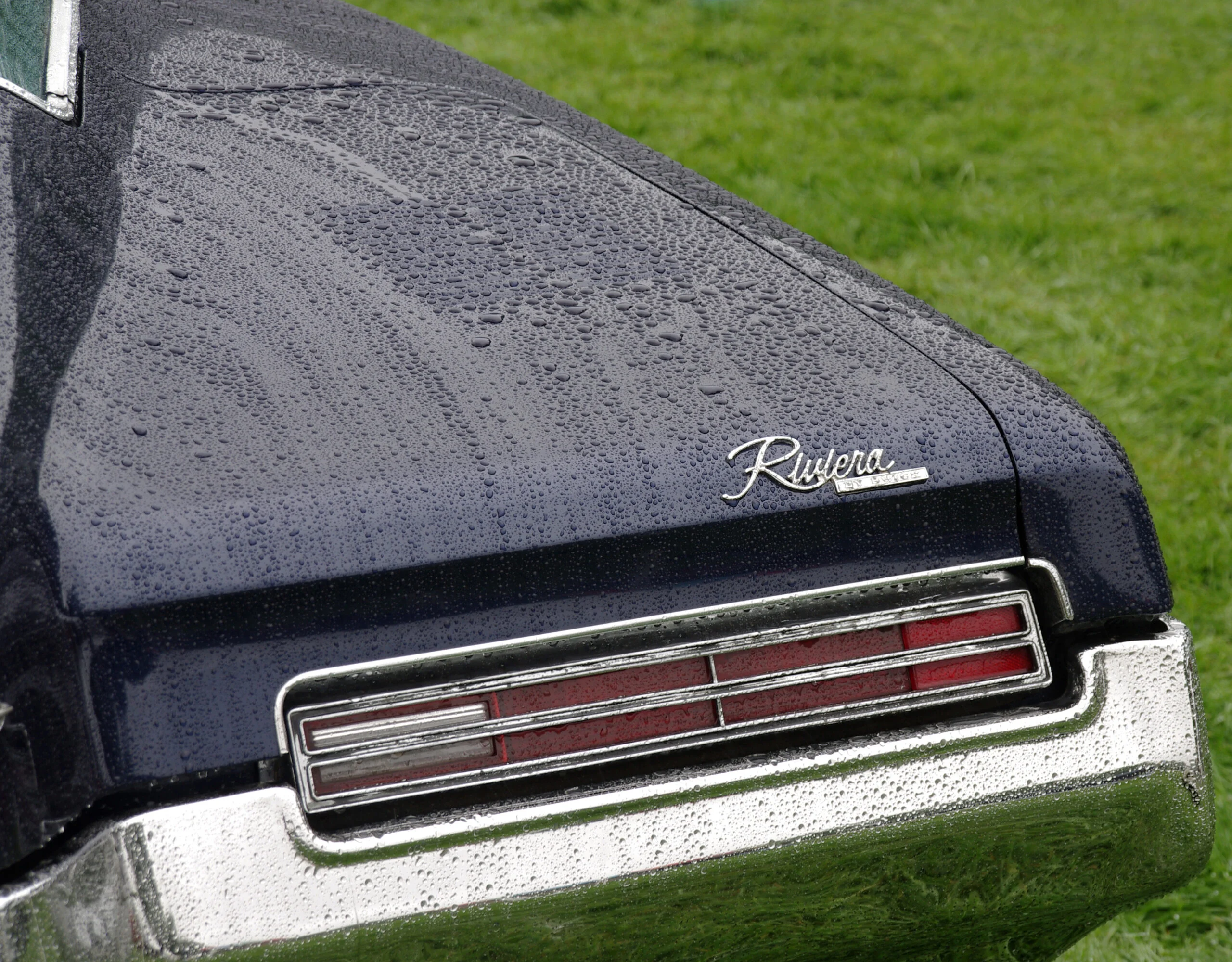
Brief Introduction of Buick Riviera
The Buick Riviera is a personal luxury car that was produced by the Buick division of General Motors from 1963 to 1999, with the exception of the 1994 model year. As one of the first entries from General Motors into the personal luxury car market, the Riviera was met with high praise from automotive journalists upon its debut. The name “Riviera,” Italian for coastline, was chosen to evoke the elegance and affluence of the French Riviera. Throughout its 36-year production run, the Riviera saw eight distinct generations, each with its own unique styling and engineering advancements. A total of 1,127,261 Rivieras were produced. Initially a rear-wheel-drive car, it transitioned to front-wheel drive in its later years.

Buick Riviera Overview
| Brand | Buick (General Motors) |
| Model | Riviera |
| Launch Year | 1963 |
| Price | Not currently in production; used prices vary by generation and condition. |
| Variants | Base, Gran Sport (GS), T-Type, Silver Arrow |
| Body Type | Coupe |
| Engine | V6 and V8 engines were offered throughout its history. |
| Power & Torque | Varied significantly by generation, from 140 hp in later models to over 360 hp in early “Super Wildcat” versions. |
| Transmission | Primarily automatic transmissions. |
| Fuel Type | Gasoline |
| Mileage | Not publicly available for all generations. |
| Colors | A wide variety of colors were available over its production run. |
| Safety Rating | Not applicable for most of its production years due to lack of standardized testing. |
| Dimensions | Varied by generation. Early models were around 208 inches in length, while later models were smaller. |
| Boot Space | Information not disclosed. |
Generations and History of Buick Riviera
First Generation (1963–1965)
The first-generation Buick Riviera was introduced on October 4, 1962, as a 1963 model. It was a ground-up design and GM’s first entry into the personal luxury car segment. The design, led by legendary GM designer Bill Mitchell, was a stunning achievement, featuring a “Coke bottle” shape with sharp lines and hidden headlights. Initially, it was powered by a 325-horsepower 401 cubic-inch “Nailhead” V8 engine. An optional 425 cubic-inch V8 with 340 horsepower was also available. For 1965, the “Gran Sport” (GS) package was introduced, featuring a “Super Wildcat” 425 V8 with dual carburetors, producing 360 horsepower. A total of 112,544 first-generation Rivieras were produced.
Second Generation (1966–1970)
The second-generation Riviera was redesigned for the 1966 model year, becoming longer, wider, and heavier. It retained its cruciform X-frame and powerful V8 engines. The hidden headlights were now designed to pivot behind the grille when not in use. For 1967, a new 430 cubic-inch V8 engine was introduced, producing 360 horsepower and 475 lb-ft of torque. By 1970, the engine was enlarged to a massive 455 cubic-inch V8, delivering 370 horsepower and over 500 lb-ft of torque. Despite strong competition, the Riviera outsold its Oldsmobile Toronado stablemate during this period.
Third Generation (1971–1973)
The third generation is arguably the most controversial in terms of design, featuring a dramatic “boat-tail” rear end conceived by stylist Jerry Hirshberg. This design was a bold move to boost sales. The car was powered by a 455 cubic-inch V8, though power was reduced to meet new emissions standards. The Stage 1 performance package was available, which included a limited-slip differential. These models were larger and heavier than their predecessors.
Fourth Generation (1974–1976)
The fourth generation saw the “boat-tail” design toned down in favor of a more conventional coupe styling. The car continued to share its platform with other full-sized GM models. Engine options remained large V8s, but with power further restricted by emissions regulations. This generation focused more on luxury and comfort rather than the performance-oriented image of the earlier models.
Fifth Generation (1977–1978)
For 1977, the Riviera was downsized, moving to GM’s smaller B platform. This was a significant change, resulting in a lighter and more fuel-efficient vehicle. Engine choices included a 350 cubic-inch Buick V8 and an Oldsmobile-built 403 cubic-inch V8.
Sixth Generation (1979–1985)
The sixth generation marked a major engineering shift as the Riviera moved to a front-wheel-drive platform, sharing its mechanicals with the Cadillac Eldorado and Oldsmobile Toronado. A notable addition was the availability of a turbocharged 3.8-liter V6 engine, a first for the Riviera. This generation was named Motor Trend’s Car of the Year for 1979. A convertible version was also offered for the first time in 1982.
Seventh Generation (1986–1993)
The seventh generation saw another downsizing and a more aerodynamic design. A key feature of this generation was the introduction of a touch-screen CRT display in the dashboard, known as the Graphic Control Center, which controlled the radio and climate functions. Power came from Buick’s 3.8-liter V6 engine. However, sales for this generation were not as strong as previous models.
Latest Generation (Eighth Generation: 1995–1999)
After a one-year hiatus, the Riviera returned for its final generation in 1995 with a radical and sleek new design. It was built on the same platform as the Oldsmobile Aurora and featured a standard 3.8-liter V6, with an optional supercharged version that produced up to 240 horsepower and 280 lb-ft of torque. The final 200 Rivieras produced in 1999 were special “Silver Arrow” models to commemorate the end of the line.
Buick Riviera Facelifts and Yearly Updates
| Year | Change / Update |
| 1964 | The 425 cu in “Wildcat” V8 became the standard engine. A “Super Wildcat” version with dual carburetors was offered as an option. The Turbo Hydramatic THM400 transmission replaced the older Dynaflow. |
| 1965 | The “Gran Sport” (GS) option was introduced, featuring the “Super Wildcat” V8 engine. The 401 cu in V8 returned as the standard engine. Headlights were concealed behind clamshell doors. |
| 1967 | A new 430 cu in V8 engine replaced the previous 425. |
| 1970 | The engine was upgraded to a 455 cu in V8. A restyle included exposed quad headlamps and a new front bumper and grille. |
| 1979 | The Riviera transitioned to a front-wheel-drive platform. A turbocharged V6 engine became available. |
| 1981 | The turbocharged model was renamed the T-Type. The Oldsmobile-built 307 cu in V8 replaced the 350 engine. |
| 1982 | A convertible model was offered for the first time. |
| 1996 | The supercharged V6 engine’s horsepower was increased to 240. |
| 1998 | The supercharged V6 became the standard engine for the Riviera. |
Buick Riviera Variants and Features
The Buick Riviera offered several notable variants throughout its production. The Gran Sport (GS), introduced in 1965, was a performance-oriented package that included a more powerful engine, sport-tuned suspension, and unique badging. The T-Type, available in the sixth generation, was a sportier trim level with a distinctive blackout grille and performance enhancements. The final generation offered a supercharged model for those seeking more power. The interior of the Riviera was always a highlight, featuring luxurious materials, wood-grain dashboards, and a host of available options like power windows, power seats, and air conditioning. Later generations introduced advanced features for their time, such as the Graphic Control Center touchscreen in the seventh generation.
Buick Riviera Engine, Performance, and Driving Experience
The Buick Riviera’s performance varied significantly across its generations. The early models, with their large V8 engines, offered impressive acceleration for their time, with 0-60 mph times in the 8-second range. The “Super Wildcat” and Gran Sport versions were particularly potent. The second generation continued this trend with even larger V8s. The driving experience in the early rear-wheel-drive models was characterized by a smooth, comfortable ride with predictable handling. With the transition to front-wheel drive in 1979, the Riviera’s driving dynamics changed, but it remained a comfortable and capable cruiser. The final generation, with its supercharged V6, offered a good balance of performance and refinement.

Buick Riviera Pricing and Mileage
The Buick Riviera is no longer in production, so pricing is based on the used car market. The value of a classic Riviera can vary widely depending on the generation, condition, and rarity. First-generation models, particularly the Gran Sport, are highly collectible and can command high prices. Later models are generally more affordable. Fuel efficiency was not a primary concern for the early V8-powered Rivieras. Mileage for later V6 models was more competitive for their time. Maintenance costs for a classic Riviera can be a consideration for potential buyers.
Buick Riviera Colors, Design, and Dimensions
The Buick Riviera has always been known for its distinctive styling. The first generation’s “Coke bottle” design and hidden headlights set a new standard for personal luxury cars. The third generation’s “boat-tail” is a memorable, if polarizing, design feature. The final generation’s sleek, modern lines were a departure from previous designs. A wide range of colors was available throughout its history. Dimensions varied by generation, with the early models being quite large and the later generations being more compact.
Buick Riviera Safety Features
- Early models were not equipped with modern safety features like airbags and ABS.
- Later generations incorporated more advanced safety systems as they became standard in the industry.
- Crash test ratings are not available for most of the Riviera’s production years.
Buick Riviera Infotainment and Connectivity
Infotainment systems in the Buick Riviera evolved significantly over its lifespan. Early models offered AM/FM radios as an option. The seventh generation was a pioneer in in-car technology with its Graphic Control Center, a touchscreen that controlled various vehicle functions. The final generation featured more modern audio systems with CD players. Apple CarPlay and Android Auto were not available during the Riviera’s production run.
Buick Riviera Owner Reviews & Ratings
Owner reviews for the Buick Riviera are generally positive, especially for the classic models. The first-generation Riviera is often praised for its timeless design and strong performance. Owners of the final generation appreciate its unique styling and comfortable ride. Some common issues reported for later models include potential transmission problems and issues with the anti-theft system. Overall, the Riviera is regarded as a reliable vehicle for its time, with Buick having a generally above-average reliability rating.
Buick Riviera Comparison with Similar Cars
The Buick Riviera’s primary competitor throughout much of its life was the Ford Thunderbird, which had established the personal luxury car market. The Riviera was GM’s answer to the Thunderbird and competed with it in terms of style, performance, and luxury. Other competitors included the Chrysler 300 letter series in the early years. In its later years, the Riviera also competed with luxury coupes from European and Japanese manufacturers like the Acura CL and BMW 3 Series Coupe.
Buick Riviera Awards and Recognition
- 1979 Motor Trend Car of the Year
Interesting Facts about Buick Riviera
- The Riviera name was first used by Buick in 1949 to designate a new two-door pillarless hardtop body style.
- The final 200 Rivieras produced were special “Silver Arrow” models.
- A turbocharged Riviera convertible served as the pace car for the 1983 Indianapolis 500.
- The design for the first Riviera was originally intended to be a new Cadillac La Salle.
Buick Riviera Legacy and Influence
The Buick Riviera played a significant role in establishing the personal luxury car segment in the American automotive market. Its innovative styling and blend of performance and luxury had a lasting impact. The first-generation Riviera is considered a design icon and one of the most beautiful American cars of the 1960s. The Riviera helped to boost Buick’s image and was a strong seller for the brand for many years. Though the personal luxury coupe market eventually declined, the Riviera remains a celebrated nameplate among classic car enthusiasts.
Buick Riviera Global Availability
The Buick Riviera was primarily sold in the North American market. It was not officially sold in large numbers in most other parts of the world. All production models were left-hand drive.
Buick Riviera Maintenance and Ownership Costs
The annual maintenance cost for a Buick Riviera can vary depending on the model year and condition. On average, the annual repair cost for a Buick is considered to be above average for ownership costs. Some common repairs can include serpentine belt replacement, fuel pump replacement, and oil pressure sensor replacement. The availability of spare parts for classic Rivieras can be a consideration, though a strong aftermarket and enthusiast community can help with sourcing parts.
Final Words about Buick Riviera
The Buick Riviera holds a special place in automotive history as a stylish and innovative personal luxury coupe. From its stunning debut in 1963 to its final, futuristic iteration, the Riviera consistently offered a unique blend of American style, comfort, and performance. While it is no longer in production, the Buick Riviera remains a desirable classic car, appreciated for its distinctive design and its role in defining an era of American automotive luxury. Its legacy continues to influence car design and captivate enthusiasts around the world.